
Blast Freezer Door — Heated Frame, Heavy-Duty −40°C
Purpose-built blast freezer doors for chambers operating down to −40°C — heated seal frame, maximum insulation, specialised low-temperature gaskets, and heavy-duty construction engineered for extreme cold-side service.
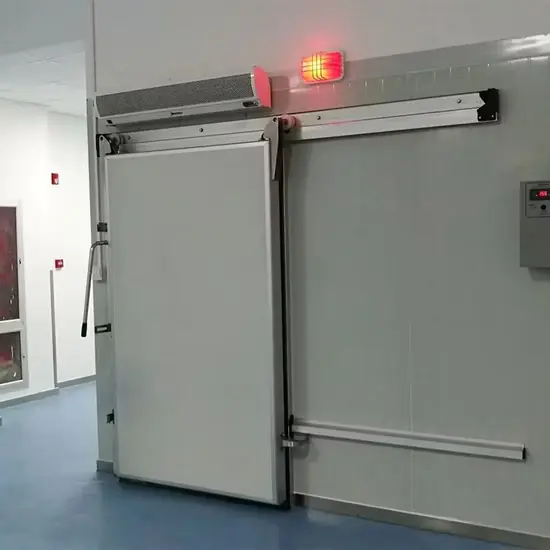
Purpose-built blast freezer doors for chambers operating down to −40°C — heated seal frame, maximum insulation, specialised low-temperature gaskets, and heavy-duty construction engineered for extreme cold-side service.
The Prime Coil blast freezer door is a purpose-built extreme-cold access solution for blast freezing chambers, IQF tunnels, and continuous freezing lines operating at temperatures down to −40°C. Every blast freezer door we supply combines heavy-duty construction, maximum insulation thickness, specialised low-temperature gasket materials, and a heated seal frame that prevents freeze-stick and ice buildup — engineering specifically for the operating conditions that destroy regular cold storage doors within months.
Why blast freezer doors are a distinct product, not just a cold-side variant
A blast freezer chamber operates in an environment that is fundamentally different from a walk-in freezer, and doors serving these chambers face engineering challenges that no other cold storage door application shares:
Extreme temperature differential. A regular freezer room runs at −18°C to −25°C. A blast freezer runs at −30°C to −40°C, sometimes −45°C for specific applications. The temperature differential across the door — cold interior to warm exterior — routinely exceeds 60°C. Standard door construction cannot handle this thermal gradient without frame condensation, panel warping, and rapid seal degradation.
High pressure differential from blast fans. Blast freezing uses high-velocity fans to force cold air through product rapidly. These fans create significant negative pressure inside the chamber compared to the exterior — every gap around the door becomes an active air leak. Poorly-sealed blast freezer doors let warm air infiltrate continuously, defeating the entire freezing process.
Continuous freeze-stick risk. At −40°C, any moisture on the door gasket freezes solid within minutes. When the door opens, frozen gasket material tears off, damaging the seal and eventually rendering it unserviceable. Standard EPDM gaskets, even low-temperature variants, are not sufficient for continuous −40°C operation without heat management.
Ice buildup on frame surfaces. Warm-side frame surfaces exposed to moist ambient air condense continuously, then freeze on the cold side of the frame. Ice accumulates around the door opening, gradually reducing effective opening dimensions and eventually interfering with door operation entirely.
Prime Coil blast freezer doors are engineered from the ground up to handle these specific challenges — not adapted from freezer door platforms designed for less demanding applications.
Heated seal frame — the critical engineering feature
The single most important feature of any blast freezer door is the heated seal frame. Without heating, gasket freeze-stick is inevitable within weeks of continuous operation at −40°C. With properly-engineered heating, doors operate reliably for years without seal replacement.
Our heated frame design uses a low-wattage electrical heating element embedded in the frame perimeter — specifically around the gasket compression zone. The heating maintains the frame surface at approximately +5°C, preventing:
- Gasket freeze-stick — the gasket stays flexible enough to compress and release without tearing
- Ice formation on frame surfaces — warm frame surface prevents moisture condensation and subsequent freezing
- Warm-side condensation — no visible moisture buildup on exterior door frame surfaces
- Seal degradation — gasket stays within its designed operating temperature range even in blast freezer service
Total heating power is typically 200-500 watts depending on frame perimeter — modest energy consumption compared to the refrigeration savings from eliminated air leakage through failed seals.
Maximum insulation for extreme cold
Every blast freezer door uses maximum PUF insulation thickness in the door panel — typically 150-200 mm depending on operating temperature and door size. The thicker insulation:
- Reduces heat gain through the door panel to the freezing chamber
- Prevents cold-side condensation on interior surfaces
- Maintains panel dimensional stability under extreme thermal gradient
- Extends refrigeration equipment life by reducing chamber heat load
PUF density and thickness are matched to the specific chamber temperature and door dimensions during specification — no generic “one thickness fits all” approach.
Specialised low-temperature gasket materials
Standard EPDM gaskets, even those rated for freezer applications, are inadequate for continuous blast freezer service. Our blast freezer door uses specialised low-temperature gasket materials engineered for continuous operation at −40°C:
- Special EPDM formulation — modified compound that maintains flexibility down to −50°C
- Silicone gasket options — for applications requiring even lower temperature capability (−60°C and below)
- Reinforced profile — thicker cross-section resists compression set at extreme cold
- Multi-lip design — primary and secondary seals for redundancy under high pressure differential
Combined with the heated frame, these gaskets deliver 8-10 year seal life in blast freezer service — comparable to standard cold storage doors in normal freezer applications.
Available in sliding or hinged configurations
Every blast freezer door in our range is available in two base configurations:
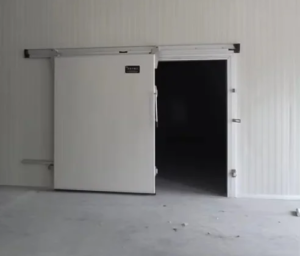
Sliding configuration — for main chamber access with wider openings, forklift and pallet traffic, or dedicated blast freezing lines. Uses reinforced aluminium extrusion track with cold-rated bearings, purpose-built for blast freezer service. Available in single-leaf or double-leaf configurations for wider openings.
Hinged configuration — for pedestrian access, service entry, and smaller chamber openings. Uses heavy-duty cold-storage-rated hinges with sealed bearings, enhanced for the extreme cold-side operation. Full-perimeter heated frame maintains seal performance.
Manual, automatic, or interlocked operation
Standard configuration is manual operation with heavy-duty push-pull hardware. For blast freezing lines with continuous product flow, automatic operation is available with cold-rated motor drives and heated sensor housings that function reliably at −40°C.
Interlocked operation is required for many blast freezing installations — the chamber door cannot open while the blast fans are running (protecting operators from extreme air velocity) and the fans cannot start while the door is open (protecting product from partial-freezing exposure). Our PLC integration handles this interlock logic natively.
Built to run, season after season.
Heated seal frame
Low-wattage electrical heating element embedded around the gasket compression zone maintains frame surface at approximately +5°C. Prevents gasket freeze-stick, ice formation on frame surfaces, and warm-side condensation. Typical power consumption 200-500 W depending on frame perimeter.
Maximum PUF insulation (150-200 mm)
Thicker insulation than any other cold storage door — reduces heat gain through the door panel, prevents cold-side condensation on interior surfaces, and maintains dimensional stability under the extreme thermal gradient. Thickness matched to specific chamber temperature during quotation.
Specialised low-temperature gaskets
Modified EPDM formulation flexible down to −50°C, or silicone options for even lower temperatures. Reinforced cross-section resists compression set at extreme cold. Multi-lip design provides primary and secondary sealing under high pressure differential from blast fans.
Heavy-duty construction throughout
All hardware — hinges, tracks, bearings, handles, latches — upgraded to heavy-duty specifications appropriate for extreme cold service and continuous operation. Cold-rated stainless steel components, sealed bearings, corrosion-resistant fasteners throughout.
Available sliding or hinged
Sliding configuration for main chamber access with wider openings and forklift traffic. Hinged configuration for pedestrian access, service entry, and smaller chamber openings. Both configurations available across the same temperature and specification range.
Blast fan interlock ready
PLC integration handles blast fan interlock logic natively — chamber door cannot open while blast fans are running, and fans cannot start while door is open. Protects operators from extreme air velocity and protects product from partial-freezing exposure.
Manual, automatic, or interlocked operation
Standard manual operation with heavy-duty hardware. Automatic operation available with cold-rated motor drives and heated sensor housings that function reliably at −40°C. Interlocked operation standard for continuous blast freezing lines.
8-10 year seal life in blast service
Combination of heated frame and specialised low-temperature gaskets delivers seal life comparable to standard cold storage doors in normal freezer applications — an achievement in blast freezer service where standard seals fail within months.
Custom engineering per installation
Every blast freezer door is engineered specifically for your chamber temperature, door dimensions, blast fan pressure differential, and cycling pattern. Standard sizes cover common installations; custom sizes and specialised configurations available for demanding applications.
Specifications
| Type | Purpose-built blast freezer door |
|---|---|
| Opening widths | 1,000 mm to 3,000 mm typical |
| Opening heights | 2,000 mm to 3,500 mm typical |
| Panel construction | Heavy-duty PUF-insulated with steel skin |
| Panel thickness | 150 mm to 200 mm (variant dependent) |
| Chamber temperature | −30°C to −50°C |
| Track material | Aluminium extrusion (sliding variant) |
| Hinge material | Cold-rated stainless steel (hinged variant) |
| Frame gasket | Specialised low-temp EPDM or silicone |
| Heated frame | 200-500 W embedded heating element |
| Frame surface temperature | ~+5°C maintained |
| Panel skin | Pre-painted galvanised or stainless steel |
| Operation options | Manual, automatic, or PLC-interlocked |
| Motor drive (auto) | Cold-rated for −40°C operation |
| Sensors (auto) | Heated housing for extreme cold |
| Service life | 15+ years with heated frame maintenance |
| Seal life | 8-10 years in blast service |
| Power supply | 220/415 V AC for heated frame and motor |
| Certifications | Compliant with cold-chain standards |
Where it's used.
- Blast freezing chambers
- IQF (Individually Quick Frozen) tunnels
- Continuous freezing lines
- Food processing blast freezers
- Seafood freezing plants
- Meat & poultry freezing
- Fruit & vegetable freezing
- Ice cream production plants
- Cold chain pre-cooling
- Extreme cold storage (−30°C+)
Product questions, answered.
Why can't I use a regular freezer door for blast freezer applications?
Three reasons. First, temperature differential — a blast freezer runs 15-20°C colder than a regular freezer, creating thermal gradients that standard door construction cannot handle. Second, pressure differential — blast fans create significant negative pressure that regular freezer doors cannot seal against. Third, gasket freeze-stick — at −40°C, standard EPDM gaskets freeze to the frame within weeks of continuous operation, and eventually tear on opening. Purpose-built blast freezer doors address all three challenges; regular freezer doors don't and fail predictably within 6-12 months in blast service.
How does the heated seal frame actually work?
A low-wattage electrical heating element (typically 200-500 W depending on frame perimeter) is embedded in the frame around the gasket compression zone. When powered on, it maintains the frame surface at approximately +5°C — warm enough to prevent gasket freeze-stick and ice formation, but not warm enough to significantly increase chamber heat load. The heating is continuous when the chamber is in operation, and adds only modest electricity consumption compared to the refrigeration energy saved by eliminating air leakage through failed seals.
Does the heated frame add significant heat to the chamber?
Minimal impact. A 300 W frame heater running continuously adds approximately 300 W of heat load to the chamber — negligible compared to typical blast freezer refrigeration capacities (which are measured in tens of kilowatts). The additional refrigeration required is far less than the energy saved by preventing air infiltration through failed seals. Net energy impact of the heated frame is positive (reduces total energy consumption) after the second month of operation.
Which gasket material — EPDM or silicone — for my application?
Depends on operating temperature. Standard modified EPDM works well down to −40°C and is the industry choice for most blast freezer applications. Silicone gaskets extend the operating range to −60°C for specialty applications (pharmaceutical ultra-low temperature storage, specific research applications). Silicone is more expensive and has some compression set characteristics that require different frame design. For chamber temperatures at −40°C or warmer, EPDM is the recommended choice.
Should I choose sliding or hinged configuration?
Same logic as regular cold storage doors. Sliding for wider openings (over 1,500 mm), forklift and pallet traffic, main chamber access. Hinged for smaller openings (under 1,200 mm), pedestrian access, service entry. IQF line integrations typically use sliding doors sized to product flow requirements. Our engineers help specify during quotation based on your chamber layout and traffic pattern.
Do I need PLC interlock with the blast fans?
Strongly recommended for safety and operational reasons. Blast fan interlock prevents the chamber door from opening while fans are running — protecting operators from potentially injurious air velocities (blast fans move air at 5-8 m/s). It also prevents fans from starting while the door is open — protecting product from partial exposure to freezing conditions. Most blast freezer installations require this interlock as standard practice; some regulatory environments make it mandatory.
What maintenance does the heated frame require?
Minimal ongoing maintenance. Standard maintenance: annual electrical continuity check of the heating element, visual inspection of frame temperature during operation (surface should feel slightly warm, never hot), and functional test of the temperature control (many installations include a thermostat that cycles the heater based on frame temperature). Heating elements have 15+ year expected service life; replacement requires frame disassembly but is a straightforward procedure.
What's the typical delivery and installation timeline?
Standard blast freezer doors ship in 6-8 weeks from order confirmation. IQF-integrated variants and ultra-low temperature configurations run 8-10 weeks due to specialised gasket procurement and PLC integration engineering. Installation typically takes 2-3 days per door for mechanical work plus 1-2 days for heated frame electrical work and PLC integration. Total project timeline from order to operational: 8-12 weeks for standard, 10-14 weeks for custom configurations.
Every Prime Coil blast freezer door is engineered against your specific chamber operating temperature, blast fan configuration, and door dimensions — because blast freezer service destroys any door not specifically engineered for it, and there are no shortcuts. Send us your chamber specifications and we come back with the right model, delivered price, and installation timeline within 2 working days.

Tell us your daily requirement.
Share your output target, product and ambient conditions — we'll specify the machine and the plant around it.