
Ammonia Gas & Liquid Coolers — Subcoolers & Intercoolers
Subcool liquid ammonia to lift refrigeration effect, desuperheat gas between compression stages to protect compressor life — engineered for industrial ammonia refrigeration duty.
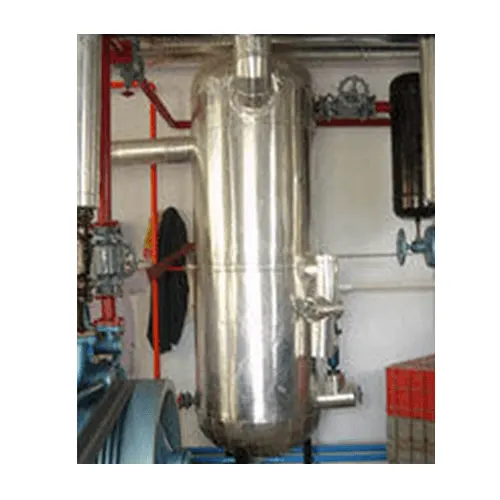
Subcool liquid ammonia to lift refrigeration effect, desuperheat gas between compression stages to protect compressor life — engineered for industrial ammonia refrigeration duty.
The Prime Coil ammonia gas liquid cooler range delivers precise heat exchange between refrigerant streams inside your plant — subcooling liquid ammonia after the condenser to lift refrigeration effect, and desuperheating gas between compression stages to protect high-side compressor life. Available in 10 standard sizes covering 15 to 1,000 tons of refrigeration, our ammonia gas liquid cooler platform is engineered for continuous industrial duty in cold storage, ice manufacturing, food processing and turnkey ammonia plant applications.
Why every industrial plant needs an ammonia gas liquid cooler
An ammonia gas liquid cooler serves two distinct but equally important roles in a well-designed refrigeration circuit:
As a liquid subcooler: installed downstream of the condenser and high-pressure receiver, it cools the condensed liquid ammonia by 3-10°C below its saturation temperature. That extra subcooling directly increases the refrigeration effect per pound of ammonia circulated — typically improving plant COP by 3-8% at no additional compressor work. On a plant running 5,000 kWh/day, that’s a saving of ₹4-8 lakh per year in electricity, every year.
As an intercooler / desuperheater: in two-stage or booster compressor systems, an ammonia gas liquid cooler sits between the low-stage and high-stage compressors. It cools the hot discharge gas from the low-stage machine before it enters the high-stage suction — protecting the high-stage compressor from thermal overload, reducing lubricating oil breakdown, and materially extending compressor life.
Shell-and-tube construction — the industry workhorse
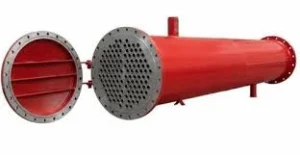
Every Prime Coil ammonia gas liquid cooler is built as a shell-and-tube heat exchanger — the most proven, most repairable, and most reliable heat exchange technology in industrial refrigeration. The design routes one fluid through a bundle of internal tubes while the other flows around the tube exterior inside the shell, transferring heat through the tube walls with high efficiency and low pressure drop.
Shell fabricated from certified pressure vessel plate; tubes are seamless or ERW steel selected for ammonia compatibility. Tube bundles are removable for periodic cleaning and inspection — critical for long service life in industrial water-cooled duty. Design and fabrication comply with ASME Section VIII Division 1, IS 2825, and PED standards, with PESO and IBR certification available for Indian statutory compliance.
10 standard sizes, 15 to 1,000 TR
Our ammonia gas liquid cooler range is standardised into 10 sizes covering typical refrigeration duties from small backup systems to large industrial plants. Standardisation means shorter lead times, proven performance data, and consistent spare parts availability across your installed fleet. Custom sizes fabricated for duties outside standard range on request.
Complete engineering support
Selecting the right ammonia gas liquid cooler is not a catalogue exercise — it depends on your plant’s specific temperature profile, refrigerant flow rate, cooling water availability and desired subcooling target. Every enquiry gets a full engineering review: our team calculates the required heat exchange area, selects the appropriate model, and quotes with dimensional drawings, foundation loads, and connection schedule ready for your project engineering.
Built to run, season after season.
Shell-and-tube construction
The industry workhorse for ammonia heat exchange — proven, repairable, and reliable across decades of service. Removable tube bundle for periodic inspection and cleaning; shell and dished ends built from certified pressure vessel plate to ASME Section VIII Div 1.
Dual function — liquid subcooling & gas cooling
Same equipment platform handles both liquid subcooling (downstream of condenser) and gas desuperheating / intercooling (between compression stages). Select the configuration based on your plant duty — the underlying technology stays the same.
3-8% COP improvement from subcooling
Every degree of liquid subcooling below saturation increases the refrigeration effect per pound of ammonia. Correctly sized subcoolers routinely deliver 3-8% plant COP improvement — a permanent energy saving that pays back the investment within 12-18 months on continuous-duty plants.
Protects high-stage compressors
When used as an intercooler in booster systems, the gas cooler drops discharge temperature from the low-stage compressor before it enters the high-stage machine. This protects the high-stage from thermal overload, keeps lubricating oil in operating viscosity range, and materially extends compressor life.
10 standard sizes, 15-1,000 TR
Standardised model range covers small backup plants to large industrial installations. Standardisation means shorter lead times, proven performance data, and consistent spare parts across your installed fleet. Custom sizes fabricated on request for duties outside the standard range.
Carbon steel / LT steel construction
Shell and dished ends from carbon steel for standard duty; low-temperature steel available for cold-side applications and cold-climate installations. Tube material selected per your cooling medium — copper for water duty, steel for ammonia-to-ammonia service.
International standards compliance
Every unit designed and fabricated to ASME Section VIII Div 1, IS 2825, and PED 2014/68/EU. PESO SMPV certification standard for Indian projects; IBR compliance where required. Third-party inspection (Lloyd's, TÜV, DNV, SGS) available on request.
Pressure tested & certified
100% of coolers hydro-tested at 1.5x design pressure before dispatch. Pneumatic leak-tested on all welds. Full documentation package — material test certificates, welder qualifications, hydraulic test reports, and radiography reports — ships with every unit.
Complete fitting package
Every cooler ships with standard fittings: inlet and outlet isolation valves, safety relief valves, drain valves, air vent, pressure gauge, and temperature indicators. Additional connections for level control or oil drainage added per specification.
Specifications
| Type | Shell-and-tube heat exchanger |
|---|---|
| Function | Liquid subcooler or gas intercooler / desuperheater |
| Capacity range | 15 TR to 1,000 TR (53 kW to 3,517 kW) |
| Number of standard sizes | 10 |
| Shell material | Carbon steel / Low-temperature steel |
| Tube material | Seamless / ERW steel or copper (per medium) |
| Dished end material | Carbon steel / Low-temperature steel |
| Design code | ASME Section VIII Div 1 / IS 2825 / PED 2014/68/EU |
| Design pressure — shell side | 25 bar typical |
| Design pressure — tube side | 25 bar typical, higher on request |
| Design temperature | -40°C to +150°C |
| Tube configuration | Straight or U-tube, removable bundle |
| Baffle configuration | Segmental baffles, cross-flow |
| Hydraulic test | 1.5x design pressure, 100% units |
| Radiography | Spot / 100% RT per code |
| Certification | PESO, IBR, third-party on request |
| Connections | Flanged, per project spec |
Where it's used.
- Industrial ammonia refrigeration
- Cold storage plant rooms
- Ice manufacturing plants
- Two-stage / booster systems
- Food processing plants
- Dairy & beverage cooling
- Chemical process refrigeration
- Turnkey ammonia plant supply
- DX liquid feed systems
- Compressor oil cooling loops
Product questions, answered.
What's the difference between a subcooler and an intercooler?
Both are ammonia gas liquid coolers — same equipment family — but they sit in different parts of the plant. A subcooler is installed downstream of the condenser to cool the condensed liquid ammonia below its saturation temperature; this increases refrigeration effect per pound of refrigerant. An intercooler sits between the low-stage and high-stage compressors in a booster system, cooling hot discharge gas from the low-stage before it enters the high-stage suction. Same shell-and-tube construction, different plumbing.
How do I size the correct ammonia gas liquid cooler for my plant?
Sizing depends on your refrigerant mass flow rate, entering and leaving temperatures, cooling medium flow rate and temperature, and desired approach temperature. Our engineers calculate the required heat transfer area using validated thermal design methods, then select the standard model that meets the duty with reasonable margin. Send us your plant P&ID or thermal balance and we'll size correctly first time.
Can the cooler use water, glycol, or another refrigerant as the cooling medium?
All of the above. Common configurations include water-cooled subcoolers (using plant cooling tower water on tube side, ammonia on shell side), glycol-cooled coolers for below-freezing applications, and ammonia-to-ammonia coolers where cold liquid from an intermediate vessel provides the cooling. Configuration is selected based on what cooling medium you have available on site.
Why shell-and-tube instead of plate heat exchangers?
Both technologies work for ammonia service, but for industrial-scale duties, shell-and-tube offers significant advantages: higher pressure ratings, longer service life without gasket replacement, easier inspection and cleaning of internal surfaces, and better performance with dirty cooling water. Plate exchangers are more compact for small clean-water duties but require regular gasket service — a maintenance burden that shell-and-tube avoids.
What certifications ship with the cooler?
Every unit ships with material test certificates (mill certs for shell, tubes, and dished ends), welding procedure records (WPS/PQR), welder qualifications, hydraulic test report at 1.5x design pressure, and radiography reports where 100% RT was specified. PESO SMPV certification standard for Indian projects. IBR certification available. Third-party inspection reports (Lloyd's, TÜV, DNV, SGS) supplied per project requirement.
What's the typical lead time?
Standard sizes from our regular model list ship in 6-8 weeks from order confirmation. Custom sizes or units requiring specific third-party certification (Lloyd's, IBR) run 10-12 weeks. Every unit is fabricated to your project's material grade and design pressure — we do not stock finished coolers because ensuring MTC traceability requires build-to-order.
Can the cooler be installed alongside an existing plant?
Yes — subcooler retrofits are among the most common energy-saving upgrades we ship. If your existing plant has no liquid subcooling and your ambient conditions permit meaningful subcool temperatures, adding a properly sized subcooler between the receiver and the expansion valves typically pays back within 12-18 months. Discuss your existing plant details with our engineering team for a payback estimate.
Every ammonia gas liquid cooler we ship is selected against your specific plant duty — not against a generic catalogue figure. Send us your temperatures, flow rates, and available cooling medium, and we'll come back with the right model, delivered price, and expected COP impact within one working day.
Tell us your daily requirement.
Share your output target, product and ambient conditions — we'll specify the machine and the plant around it.