
Ammonia Horizontal Accumulator — Suction Line Protection
Protect compressors from liquid slugging — horizontal cylindrical vessels engineered to catch liquid carryover from evaporators before it reaches the compressor suction.
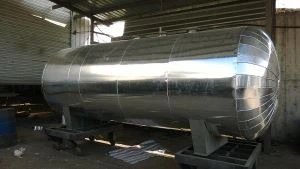
Protect compressors from liquid slugging — horizontal cylindrical vessels engineered to catch liquid carryover from evaporators before it reaches the compressor suction.
The Prime Coil ammonia horizontal accumulator is a critical safety and protection vessel installed on the compressor suction line of industrial refrigeration plants. Every ammonia horizontal accumulator we ship is engineered to prevent liquid ammonia carryover from the evaporators reaching the compressor — the single most damaging event that can occur in an ammonia refrigeration system.
Why every industrial plant needs a suction accumulator
Compressors are designed to compress vapour, not liquid. When liquid ammonia enters the compressor suction — a situation called liquid slugging — the incompressible fluid causes catastrophic mechanical damage: broken valves, bent connecting rods, cracked cylinder heads, and in severe cases complete compressor destruction. Insurance claims from ammonia liquid slugging events routinely exceed ₹50 lakh in equipment damage alone, before counting the plant downtime cost.
An ammonia horizontal accumulator sits between the evaporators and the compressor suction, catching any liquid that escapes the evaporator during defrost cycles, load transients, or startup conditions. The vessel’s internal geometry allows liquid to settle to the bottom by gravity while vapour continues to the compressor from the top. The trapped liquid is either boiled off gradually by heat from an internal heater, or drained back to the low-pressure receiver through a controlled bleed line.
Horizontal orientation for high-capacity duty
Our ammonia horizontal accumulator range is designed specifically for medium and large refrigeration plants where liquid separation performance and space efficiency both matter. The horizontal cylindrical geometry provides:
- Superior liquid-vapour separation — the large horizontal free surface allows liquid droplets to fall out of the vapour flow more effectively than a compact vertical vessel
- Higher liquid holding capacity — critical for plants with large evaporator batteries or aggressive hot-gas defrost cycles that can dump substantial liquid slugs into the suction line
- Easier level indication — horizontal orientation gives smoother liquid level response and more accurate readings from float switches and gauge glasses
- Ground-level access — no scaffolding or elevated platforms needed for routine inspection and maintenance
Precision fabrication to international standards
Every ammonia horizontal accumulator is fabricated from carbon steel or low-temperature steel plate and pipe, selected based on your plant’s Minimum Design Metal Temperature (MDMT). Shells up to 300 mm (12″) diameter are made from seamless or ERW welded pipe for wall thickness consistency; above 300 mm, shells are rolled from certified pressure vessel plate. Dished end plates match the shell material and are welded to code-qualified WPS/PQR procedures.
Design and fabrication comply with:
- ASME Section VIII Division 1 (pressure vessel code)
- IS 2825 (Indian pressure vessel standard)
- PED 2014/68/EU (European Pressure Equipment Directive)
- PESO SMPV Rules 1981 (Indian statutory compliance)
- IBR (Indian Boiler Regulation) where applicable
Third-party inspection by Lloyd’s Register, TÜV, DNV, or SGS is available on request.
Complete instrumentation package
Every ammonia horizontal accumulator ships ready for installation with a comprehensive fitting package:
- Reflex-type gauge glass with isolation valves
- High liquid level float switch (for compressor cutout protection)
- Low-level switch
- Dual safety relief valves with 3-way selector
- Main suction inlet and outlet flanged connections
- Drain valve
- Pressure gauge
Optional additions include a level transmitter for remote monitoring and an electric heating element for gradual liquid boil-off.
Built to run, season after season.
Prevents liquid slugging damage
Catches liquid ammonia carryover from evaporators before it reaches the compressor suction. A single averted slugging event pays back the accumulator many times over — compressor damage from liquid slugging routinely exceeds ₹50 lakh in equipment replacement alone.
Horizontal cylindrical geometry
Large horizontal free surface provides superior liquid-vapour separation compared to compact vertical vessels. Ideal for medium and large plants with high suction flow rates and aggressive defrost cycles that can dump substantial liquid slugs.
Higher liquid holding capacity
Sized generously to accommodate liquid returns from hot-gas defrost cycles, load transients, and evaporator overfeed spillover. Standard sizing includes safety margin so the accumulator is never overwhelmed by unexpected liquid returns.
Carbon steel / LT steel construction
Shell and dished ends from certified pressure vessel plate. Standard carbon steel for typical duty; low-temperature carbon steel (SA-333 Gr 6) for cold-climate installations and applications where MDMT drops below -20°C.
Precision welded fabrication
Shells up to 300 mm diameter from seamless or ERW welded pipe for wall thickness consistency; above 300 mm rolled from certified plate. All welds executed to WPS/PQR-approved procedures with radiography inspection per code requirement.
Ground-level saddle mounting
Horizontal saddle-mounted installation places all connections and instrumentation at accessible heights — no scaffolding required for routine inspection, maintenance, or level checks. Two-point saddle support with anchor bolts for seismic zones.
International standards compliance
Every unit designed and fabricated to ASME Section VIII Div 1, IS 2825, and PED 2014/68/EU. PESO SMPV certification standard for Indian projects; IBR compliance where required. Third-party inspection agencies (Lloyd's, TÜV, DNV, SGS) engaged per client requirement.
Complete fitting package
Standard supply includes: reflex-type gauge glass with isolation valves, high liquid level cutout switch, low-level switch, dual safety relief valves with selector, inlet and outlet flanged connections, drain valve, and pressure gauge. Level transmitters and heaters optional.
Pressure tested & certified
100% hydro-tested at 1.5x design pressure before dispatch. Pneumatic leak-tested on all welds. Full documentation — material test certificates, welder qualifications, hydraulic test reports, and radiography reports — ships with every vessel.
Where it's used.
- Industrial ammonia refrigeration
- Cold storage plant rooms
- Ice manufacturing plants
- Food processing refrigeration
- Dairy & beverage systems
- Hot-gas defrost systems
- Large evaporator batteries
- Turnkey ammonia plants
- Multi-compressor installations
Every ammonia horizontal accumulator we ship is sized against your specific plant duty — including realistic defrost liquid returns and safety margin. Compressor protection is not a place to cut corners.
Capacities & model codes
Standard Duty Horizontal Accumulator
Carbon steel construction for typical industrial refrigeration duty with MDMT above -20°C. Ideal for standard cold storage plants, food processing, and ice manufacturing where suction temperatures stay in normal industrial range.
- Carbon steel shell and dished ends (SA-516 Gr 70)
- Design temperature -20°C to +50°C
- Design pressure 25 bar typical
- Standard fitting package included
- ASME Section VIII / IS 2825 / PESO certified
Low-Temperature Horizontal Accumulator
Low-temperature carbon steel construction for applications where MDMT drops below -20°C. Required for cold-climate installations, deep-freeze applications, and any plant where cold suction gas creates low metal temperature conditions during pressure relief events.
- Low-temperature carbon steel (SA-333 Gr 6)
- Design temperature -40°C to +50°C
- Impact-tested materials with Charpy test certificates
- Suitable for cold-climate installations
- Enhanced third-party inspection standard

Tell us your daily requirement.
Share your output target, product and ambient conditions — we'll specify the machine and the plant around it.