
Ammonia Vertical Accumulator — Compact Suction Protection
Space-efficient suction line protection for plant rooms where floor area is at a premium — same compressor protection, compact vertical footprint.
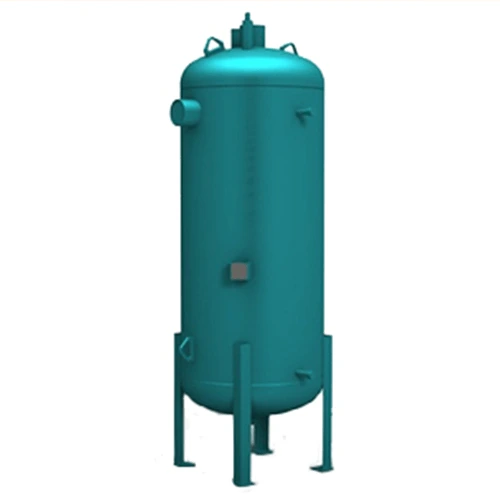
Space-efficient suction line protection for plant rooms where floor area is at a premium — same compressor protection, compact vertical footprint.
The Prime Coil ammonia vertical accumulator is a space-efficient suction line protection vessel designed for industrial refrigeration plants where floor area is at a premium. Every ammonia vertical accumulator we ship performs the same critical function as its horizontal counterpart — preventing liquid ammonia from reaching the compressor suction — but in a compact vertical footprint that fits into plant rooms where a horizontal vessel would not.
When to choose a vertical accumulator over a horizontal one
Selecting between vertical and horizontal orientation is a design decision that depends on your plant room layout and duty profile. An ammonia vertical accumulator is the right choice when:
- Floor space is constrained — retrofits into existing plant rooms, dense industrial installations, or sites where every square metre of ground area has been allocated
- Ceiling height is available — vertical accumulators can extend upward to 3-4 metres, using otherwise-wasted overhead volume
- Capacity is small to medium — plants below 200 TR typically fit vertical accumulators comfortably; larger plants often need the enhanced liquid separation of horizontal geometry
- Package skid mounting is required — vertical geometry integrates cleanly onto compressor packages and standardised skids for OEM applications
- Distributed low-side vessels are needed — smaller vertical accumulators at each evaporator cluster can outperform one large centralised horizontal vessel
Horizontal accumulators remain the standard for large industrial plants where liquid separation performance and holding capacity matter more than footprint. The two orientations are complementary — most refrigeration engineers specify horizontal for main plant duty and vertical for auxiliary or secondary systems.
Compact vertical construction
Every ammonia vertical accumulator is fabricated as a vertical cylindrical pressure vessel with dished ends on top and bottom, mounted on structural legs or a skirt-type support. The refrigerant vapour enters through a side inlet, decelerates in the enlarged internal cross-section, and exits through the top — carrying with it only the dry gas. Any entrained liquid drops to the bottom by gravity, collecting until it is either boiled off by heat load or drained back to the low-pressure receiver.
Shell fabrication follows the same standards as our horizontal range:
- Diameters up to 300 mm (12″) from seamless or ERW welded pipe
- Diameters above 300 mm rolled from certified pressure vessel plate
- Dished end plates matching shell material and thickness
- Longitudinal and circumferential welds executed to WPS/PQR-qualified procedures
- 100% hydraulic testing at 1.5x design pressure before dispatch
International standards compliance
Every ammonia vertical accumulator is designed and fabricated to:
- ASME Section VIII Division 1 (pressure vessel code)
- IS 2825 (Indian pressure vessel standard)
- PED 2014/68/EU (European Pressure Equipment Directive)
- PESO SMPV Rules 1981 (Indian statutory compliance)
- IBR (Indian Boiler Regulation) where applicable
Third-party inspection by Lloyd’s Register, TÜV, DNV, or SGS is available on request. Every unit ships with a complete documentation package: material test certificates, welding procedure records, welder qualifications, hydraulic test reports, and radiography reports.
Standard fittings and instrumentation
Our ammonia vertical accumulator range ships ready for direct installation with a complete fitting package:
- Reflex-type gauge glass mounted on the shell for visible liquid level indication
- High liquid level switch (float or capacitive) for compressor cutout protection
- Low-level switch for control interlocks
- Dual safety relief valves with 3-way selector for maintenance changeover
- Side suction inlet with flanged connection
- Top vapour outlet flanged connection
- Bottom drain valve
- Pressure gauge with siphon
Optional additions available on specification include a level transmitter for remote monitoring and BMS integration, an immersion electric heating element for gradual liquid boil-off, and enhanced instrumentation packages for critical duty applications.
Material selection for cold-side duty
Standard construction uses carbon steel (SA-516 Grade 70) for typical industrial refrigeration duty where the Minimum Design Metal Temperature (MDMT) stays above -20°C. For cold-climate installations, deep-freeze applications, or any plant where cold suction gas creates low metal temperature conditions during pressure relief events, low-temperature carbon steel (SA-333 Grade 6) construction is available with Charpy impact-tested materials.
Built to run, season after season.
Compact vertical footprint
Occupies a fraction of the floor area needed for an equivalent horizontal accumulator. Ideal for retrofits, dense installations, package skid mounting, and any application where plant room floor space is at a premium.
Uses overhead volume efficiently
Vertical orientation converts otherwise-wasted ceiling height into usable vessel volume. In many plant rooms with 3-4 metre ceilings, this dramatically improves layout efficiency without sacrificing accumulator capacity.
Compressor protection from liquid slugging
Same critical protection function as the horizontal orientation — catches liquid ammonia carryover from evaporators before it reaches the compressor suction. Prevents catastrophic mechanical damage that routinely exceeds ₹50 lakh in equipment replacement.
Leg or skirt mounting
Structural leg supports for smaller vessels; skirt-type welded support for larger units with higher weight. Both configurations provide stable anchoring for seismic zones and easy integration into standard plant room foundations.
Carbon steel / LT steel construction
Shell and dished ends from certified pressure vessel plate. Standard carbon steel (SA-516 Gr 70) for typical duty; low-temperature carbon steel (SA-333 Gr 6) with Charpy impact-tested materials for cold-side applications and cold-climate installations.
Precision welded fabrication
Shells up to 300 mm diameter from seamless or ERW welded pipe for consistent wall thickness; above 300 mm rolled from certified plate. All welds executed to WPS/PQR-approved procedures with radiography inspection per code requirement.
International standards compliance
Every unit designed and fabricated to ASME Section VIII Div 1, IS 2825, and PED 2014/68/EU. PESO SMPV certification standard for Indian projects; IBR compliance where required. Third-party inspection agencies engaged per client requirement.
Complete fitting package
Standard supply includes: reflex-type gauge glass, high and low liquid level switches, dual safety relief valves with selector, side suction inlet and top vapour outlet flanged connections, drain valve, and pressure gauge. Level transmitter and heater available as options.
Pressure tested & certified
100% hydro-tested at 1.5x design pressure before dispatch. Pneumatic leak-tested on all welds. Full documentation package — material test certificates, welder qualifications, hydraulic test reports, and radiography reports — ships with every vessel.
Where it's used.
- Space-constrained plant rooms
- Compressor package skids
- Small to medium refrigeration plants
- Retrofit installations
- Distributed suction accumulator systems
- OEM equipment integration
- Food processing facilities
- Dairy & beverage cooling
- Cold storage secondary systems
Product questions, answered.
When should I choose vertical over horizontal accumulator orientation?
Vertical is the right choice in four scenarios: when your plant room floor space is limited (retrofits, dense installations, package skids), when ceiling height is available to use for vertical vessel height, when your plant capacity is small to medium (below 200 TR), and when you need distributed accumulators at multiple evaporator clusters rather than one large centralised vessel. Horizontal orientation is the standard for large industrial plants where liquid separation and holding capacity matter more than footprint.
Does the vertical accumulator provide the same compressor protection as horizontal?
Yes — the fundamental protection function is identical. Both orientations catch liquid ammonia carryover from evaporators before it reaches the compressor suction, preventing catastrophic liquid slugging damage. The differences are geometric: horizontal accumulators have larger free liquid surface area for enhanced separation of high-capacity flows; vertical accumulators are more compact and easier to package-skid mount.
How is the accumulator sized for my plant?
Sizing is based on peak suction flow rate (from compressor selection), maximum liquid return from a single defrost cycle (from evaporator battery sizing), and residence time required for adequate vapour-liquid separation. For vertical accumulators, we target 30-60 seconds of vapour residence time and hold the largest expected defrost slug with 25% freeboard. Send us your plant schematic and we'll size correctly.
What's the difference between leg-mounted and skirt-mounted supports?
Leg-mounted supports use structural steel legs welded to the vessel bottom, providing a compact footprint with ground-level access underneath — ideal for smaller vessels up to about 800 mm diameter. Skirt-type supports use a welded cylindrical section extending from the bottom of the vessel to the foundation, providing higher structural strength for larger vessels and better resistance to lateral loads in seismic zones. We select based on your vessel size and site conditions.
Can I mount a vertical accumulator on a compressor package skid?
Yes — this is one of the primary applications for vertical accumulators. Package refrigeration systems (particularly OEM-supplied chillers and rooftop units) integrate the accumulator, compressor, condenser and controls onto a common skid for factory assembly and site drop-in. Vertical orientation is essential in this context because horizontal vessels would exceed the skid width. We supply accumulators to OEM specifications with matching skid mounting details.
Do I need low-temperature steel for my vertical accumulator?
Depends on your Minimum Design Metal Temperature (MDMT). If your plant operates above -20°C during normal conditions and during pressure relief events, standard carbon steel (SA-516 Gr 70) is adequate. For deep-freeze plants, cold-climate installations, or systems with expansion-driven cold spots, low-temperature carbon steel (SA-333 Gr 6) with Charpy impact-tested materials is required. Our engineers calculate MDMT based on your operating conditions.
Can multiple vertical accumulators serve one plant?
Yes — distributed accumulator systems using multiple smaller vertical vessels at different evaporator clusters is a common design for large multi-zone plants. Each vertical accumulator handles its local suction flow, avoiding the long suction piping runs required for a single centralised vessel. The total accumulator capacity is distributed but the aggregate protection is equivalent to one large vessel.
What certifications and documentation ship with the accumulator?
Every vertical accumulator ships with material test certificates (mill certs for shell, ends, tubes), welding procedure records (WPS/PQR), welder qualifications, hydraulic test report at 1.5x design pressure, radiography reports per code requirement, and PESO SMPV certification for Indian projects. IBR certification available where required. Third-party inspection (Lloyd's, TÜV, DNV, SGS) supplied per project specification.
Capacities & model codes
Standard Duty Vertical Accumulator
Carbon steel construction for typical industrial refrigeration duty with MDMT above -20°C. Ideal for standard cold storage, food processing, and dairy applications where plant room floor space is limited but suction conditions stay in normal industrial range.
- Carbon steel shell and dished ends (SA-516 Gr 70)
- Design temperature -20°C to +50°C
- Design pressure 25 bar typical
- Leg-mounted for compact footprint
- Standard fitting package included
Low-Temperature Vertical Accumulator
Low-temperature carbon steel construction for applications where MDMT drops below -20°C. Required for deep-freeze applications, cold-climate plant rooms, and any installation where cold suction gas creates low metal temperature conditions.
- Low-temperature carbon steel (SA-333 Gr 6)
- Design temperature -40°C to +50°C
- Impact-tested materials with Charpy test certificates
- Suitable for cold-climate and deep-freeze duty
- Enhanced third-party inspection standard
Tell us your daily requirement.
Share your output target, product and ambient conditions — we'll specify the machine and the plant around it.