
Ammonia Shell & Tube Chiller — Water, Brine & Glycol
High-efficiency shell-and-tube chillers for water, brine, glycol, and process cooling applications — reliable heat transfer with easy cleaning and long service life across industrial refrigeration duties.
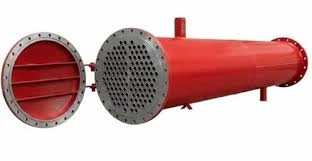
High-efficiency shell-and-tube chillers for water, brine, glycol, and process cooling applications — reliable heat transfer with easy cleaning and long service life across industrial refrigeration duties.
The Prime Coil ammonia shell tube chiller is a high-efficiency heat exchanger engineered to produce chilled water, brine, or glycol for industrial process cooling applications. Every ammonia shell tube chiller we manufacture uses boiling ammonia on the shell side to absorb heat from process fluid flowing through the tubes — delivering reliable, precisely-controlled chilling capacity across the full range of industrial refrigeration duties.
Why the ammonia shell tube chiller is the industrial standard
For plants requiring chilled water, brine, or glycol for process cooling — cold storage secondary loops, food processing chilling stations, brewery wort cooling, chemical reactor jackets, HVAC secondary systems — an ammonia shell tube chiller delivers the highest reliability at the lowest running cost of any technology in industrial use.
The physics is elegant: cold liquid ammonia enters the shell side of the chiller and boils at its saturation temperature (typically -10°C to +2°C depending on chilled fluid target). The process fluid — water, brine, or glycol — flows through the tube bundle in the opposite direction, giving up its heat to vaporise the ammonia. The chilled process fluid exits at your target temperature, ready to serve your process cooling load. The vaporised ammonia returns to the compressor suction to complete the refrigeration cycle.
This flooded evaporator configuration ensures every tube surface is wetted with liquid ammonia, delivering maximum heat transfer coefficient and minimum approach temperature between the refrigerant and the chilled fluid. That efficiency directly translates to lower compressor power draw and lower plant running cost.
Product range — Water, Brine, Glycol, Process Chillers
Our ammonia shell tube chiller range covers four standard product categories addressing the full range of industrial process cooling requirements:
Water Chillers — for chilled water production down to about 4°C, serving cold storage secondary loops, HVAC systems, food processing wash-down water, and general process cooling. Standard carbon steel construction with treated cooling tower water compatibility.
Brine Chillers — for chilled brine solutions below the freezing point of water (typically -5°C to -30°C), serving ice manufacturing plants, frozen food processing, cold storage evaporator loops, and industrial applications requiring below-zero cooling.
Glycol Chillers — for chilled glycol mixtures (typically propylene glycol for food-grade applications, ethylene glycol for industrial), serving processes requiring freeze-protected secondary loop cooling with the fluid safety of a non-toxic or industrial-approved brine.
Process Cooling Chillers — custom-engineered chillers for specific chemical, pharmaceutical, or industrial process cooling duties. Materials and tube configurations selected based on process fluid compatibility.
Multiple pass designs — 2, 4, 6 & 8 pass configurations
Every ammonia shell tube chiller is available in multiple pass configurations on the tube (process fluid) side. Baffles in the water heads route the process fluid through the tube bundle in 2, 4, 6, or 8 passes — increasing velocity, boosting heat transfer coefficient, and matching the pass arrangement to your specific flow and pressure drop constraints.
2-pass for high flow rates with low temperature drop across the chiller.
4-pass and 6-pass as the industry-standard configurations for typical chilled fluid flow rates.
8-pass designs for applications requiring maximum velocity and heat transfer coefficient at lower flow rates.
Our engineers select the optimal pass arrangement during quotation.
Capacity range 5 TR to 400 TR+
Our ammonia shell tube chiller range covers the standard chilling duties in industrial refrigeration — from small dairy or brewery chilling stations at 5 TR through large ice manufacturing and food processing facilities exceeding 400 TR. Above 400 TR single-unit capacity, parallel installations or custom-engineered large-format units serve the requirement.
Materials engineered for chiller duty
Every ammonia shell tube chiller is built from materials selected specifically for the shell-side ammonia service and tube-side process fluid compatibility:
- Shell material — carbon steel for standard duty; low-temperature carbon steel for chillers operating below -20°C evaporating temperature
- Tube material — carbon steel for water and industrial glycol duties; stainless steel (SS-304 or SS-316) for brine service, food-grade water chilling, or corrosive process fluids
- Tube sheets — precision-drilled, matched to tube material
- Water heads — cast iron or fabricated carbon steel with removable end covers for tube bundle access
All materials meet ASME Section VIII Division 1 or IS 2825 requirements with full traceability from mill certificate through to final assembly.
Factory tested for leak-proof performance
Every ammonia shell tube chiller is 100% hydrostatically tested at 1.5x design pressure before dispatch — on both shell side (ammonia) and tube side (process fluid) independently. Pneumatic leak testing on all tube-to-tubesheet joints confirms zero cross-contamination potential between refrigerant and process fluid. Full test certificates and radiography reports ship with every unit.
Built to run, season after season.
Capacity range 5 TR to 400 TR+
Full range from small dairy or brewery chilling stations to large industrial process cooling installations. Above 400 TR single-unit capacity, parallel installations or custom-engineered units serve larger duties. Standardised sizing means predictable performance and consistent spare parts.
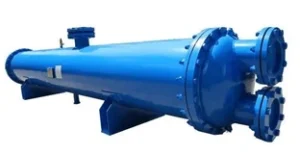
Horizontal shell-and-tube construction
Industry-standard configuration for reliable industrial chilling duty. Horizontal orientation simplifies tube bundle access, provides better liquid ammonia distribution across the tube bundle, and integrates cleanly into plant layouts alongside compressors and condensers.
Multiple pass designs (2, 4, 6, 8 pass)
Water head baffles route process fluid through the tube bundle in 2, 4, 6, or 8 passes — increasing velocity, boosting heat transfer coefficient, and matching pass arrangement to your specific flow rate and pressure drop constraints.
Carbon steel or stainless steel tubes
Carbon steel tubes for typical water and industrial glycol duties; stainless steel (SS-304 or SS-316) for brine service, food-grade water chilling, or corrosive process fluid applications. Tube material selected based on your specific process fluid compatibility.
Water, brine, and glycol compatible
Same equipment platform serves chilled water production, brine cooling for below-freezing applications, and glycol cooling for freeze-protected secondary loops. Material selection ensures long service life across all common chilled fluid types.
Optimized heat transfer performance
Flooded evaporator configuration ensures every tube surface is wetted with liquid ammonia, delivering maximum heat transfer coefficient and minimum approach temperature between refrigerant and process fluid. That efficiency directly reduces compressor power draw.
Easy cleaning and maintenance
Removable water head covers, straight tube configurations, and adequate tube spacing allow standard tube brushes and cleaning rods for routine descaling. Same maintenance procedures work on all standard shell-tube chillers — no proprietary equipment required.
Robust industrial construction
Shell and dished ends from certified pressure vessel plate, longitudinal and circumferential welds executed to WPS/PQR-approved procedures, precision tube-to-tubesheet joints. Built for 20+ years of continuous industrial service.
Factory tested for reliability
100% hydrostatic testing at 1.5x design pressure on both shell and tube sides independently. Pneumatic leak testing on tube-to-tubesheet joints confirms zero cross-contamination potential between refrigerant and process fluid. Full test certificates included.
Specifications
| Type | Horizontal shell-and-tube flooded chiller / evaporator |
|---|---|
| Chilling capacity | 5 TR to 400 TR+ per unit |
| Shell material | Carbon steel / Low-temperature carbon steel |
| Tube material | Carbon steel or SS-304 / SS-316 |
| Tube diameter | 15 mm to 25 mm typical |
| Pass configurations | 2, 4, 6, or 8 pass (tube side) |
| Tube arrangement | Triangular or square pitch |
| Baffles | Segmental, application-optimised |
| Design pressure — shell | 25 bar typical |
| Design pressure — tube | 10 bar typical (higher on request) |
| Design temperature — shell | -40°C to +50°C |
| Chilled fluid output | -30°C to +8°C (fluid dependent) |
| Compatible fluids | Water, brine, glycol, process fluids |
| Design code | ASME Section VIII Div 1 / IS 2825 |
| Hydraulic test | 1.5x design pressure, 100% units |
| Tube-tubesheet joint | Expanded or expanded + welded |
| Water heads | Removable for tube bundle access |
| Certifications | PESO, IBR, third-party on request |
Where it's used.
- Cold storages
- Food processing plants
- Dairy industries
- Ice plants
- Breweries & beverage plants
- Chemical & process industries
- Ammonia refrigeration systems
- Pharmaceutical manufacturing
- HVAC secondary loops
- Concrete cooling
Product questions, answered.
Shell tube chiller vs falling film chiller — which do I need?
Depends on your target chilled fluid temperature and hygiene requirement. An ammonia shell tube chiller is the standard for general industrial chilling duties — chilled water for HVAC and process, brine for below-zero applications, glycol for freeze-protected loops. Best suited for temperatures above 2°C and non-hygienic-critical applications. A falling film chiller delivers chilled water very close to 0.5°C without freeze-up risk, and its fully-welded stainless construction meets food-grade CIP hygiene requirements — ideal for dairy, brewing, and food processing where product-contact water is being chilled. Rule of thumb: shell tube for industrial and process cooling; falling film for food-grade and near-freezing water production.
What's the difference between a chiller and a condenser?
Same shell-and-tube technology, opposite function in the refrigeration circuit. A chiller sits on the low-pressure side and evaporates liquid ammonia to chill your process fluid — the shell side sees cold boiling ammonia, tube side sees water/brine/glycol being cooled. A condenser sits on the high-pressure side and condenses ammonia vapour back to liquid — the shell side sees hot ammonia vapour, tube side sees cooling water heating up. Every ammonia refrigeration plant needs both.
How do I select the pass configuration?
Pass configuration is selected based on process fluid flow rate, allowable pressure drop, and desired heat transfer coefficient. Higher pass counts (6 or 8 pass) give higher velocity through each tube, boosting heat transfer coefficient but also increasing pressure drop across the chiller. Lower pass counts (2 pass) suit high-flow, low-pressure-drop applications. 4-pass is the industry-standard for typical chilled fluid rates. Our engineers optimise the selection during quotation based on your specific pump capacity and system layout.
What chilled fluid temperatures can the chiller produce?
Depends on the chilled fluid type and ammonia evaporating temperature. Water chillers typically produce 4°C to 8°C chilled water. Brine chillers deliver -5°C to -30°C using calcium chloride or sodium chloride brines. Glycol chillers deliver -10°C to -20°C typical. The ammonia evaporating temperature is set 3-5°C below the chilled fluid outlet temperature for adequate heat transfer approach.
Can I use the chiller with propylene glycol for food-grade applications?
Yes — propylene glycol is FDA-approved for food contact and is the standard choice for food processing plants, breweries, and dairy secondary cooling loops. Our chiller construction (stainless steel tubes and tubesheets) meets food-grade requirements. Note that propylene glycol has slightly lower heat transfer performance than ethylene glycol at the same concentration, so chiller sizing accounts for this. For non-food industrial applications, ethylene glycol offers better thermal performance at lower cost.
What tube material should I use — carbon or stainless steel?
Depends on your process fluid. Carbon steel tubes are the industry standard for treated cooling water and industrial glycol duties — best heat transfer coefficient and lowest capital cost. Stainless steel (SS-304 or SS-316) is required for brine cooling (chlorides in brine attack carbon steel), food-grade water chilling (hygiene requirement), and corrosive process fluids. Duplex stainless available for extreme chloride environments or seawater duty.
How often does the chiller need maintenance?
Very infrequently for standard water and glycol applications. Tube-side (process fluid) cleaning is required if process fluid is untreated or aggressive — typically every 12-24 months for industrial applications, less frequently for closed glycol loops. Shell-side (ammonia) maintenance is limited to periodic inspection of level controls and oil accumulation checks. The chiller itself has no moving parts and no wear items — 20+ year service life is normal.
What documentation ships with the chiller?
Every unit ships with material test certificates (mill certs for shell, tubes, tubesheets), welding procedure records (WPS/PQR), welder qualifications, hydraulic test reports for both shell and tube sides, pneumatic leak test reports for tube-tubesheet joints, radiography reports where 100% RT was specified, and PESO SMPV certification for Indian projects. Third-party inspection (Lloyd's, TÜV, DNV, SGS) available on request.
Every ammonia shell tube chiller we ship is engineered for your specific chilled fluid and duty — not built to a catalogue. Send us the numbers and we'll come back with the correct model, tube material, and pass arrangement in one working day.
Capacities & model codes
Water Chillers
Standard configuration for chilled water production down to approximately 4°C. Serves cold storage secondary loops, HVAC systems, food processing wash-down water, and general process cooling applications. Carbon steel construction compatible with treated cooling water.
- Chilled water output 4°C to 8°C typical
- Cold storage secondary loops
- HVAC and general process cooling
- Standard carbon steel construction
- Cost-effective baseline configuration
Brine Chillers
Engineered for chilled brine solutions below the freezing point of water — typically -5°C to -30°C output. Serves ice manufacturing plants, frozen food processing, low-temperature cold storage evaporator loops, and industrial below-zero cooling applications.
- Chilled brine output -5°C to -30°C
- Ice manufacturing and frozen food
- Below-zero process cooling
- Stainless steel tube construction typical
- Low-temperature steel shell where required
Glycol Chillers
Chilled glycol mixture production for freeze-protected secondary loop cooling — propylene glycol for food-grade applications, ethylene glycol for industrial duties. Serves processes requiring freeze protection with non-toxic or industrial-approved brine.
- Propylene glycol for food-grade applications
- Ethylene glycol for industrial duties
- Freeze-protected secondary cooling
- Wide operating temperature range
- Food-grade or industrial construction
Process Cooling Chillers
Custom-engineered chillers for specific chemical, pharmaceutical, or industrial process cooling duties. Materials, tube configurations, and design pressures selected based on your specific process fluid compatibility and duty requirements.
- Custom-engineered for specific process fluid
- Chemical and pharmaceutical applications
- Materials selected for fluid compatibility
- Custom tube arrangement and design pressure
- Extended documentation and testing packages

Tell us your daily requirement.
Share your output target, product and ambient conditions — we'll specify the machine and the plant around it.