
Automatic Sliding Door for Cold Storage — Hands-Free
Purpose-built automatic sliding doors for cold storage — sensor-operated hands-free access engineered for high-cycle traffic, food safety compliance, and pharmaceutical hygiene protocols.
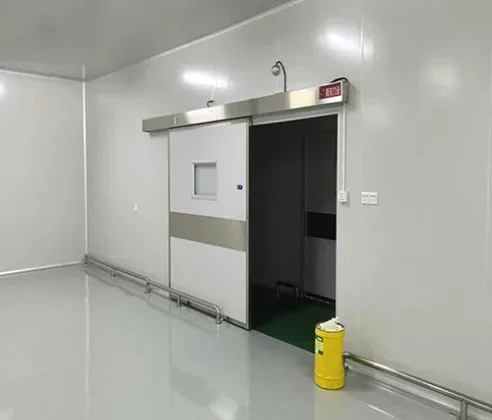
Purpose-built automatic sliding doors for cold storage — sensor-operated hands-free access engineered for high-cycle traffic, food safety compliance, and pharmaceutical hygiene protocols.
The Prime Coil automatic sliding door for cold storage is a purpose-built hands-free access solution for facilities where manual doors are impractical — high-cycle traffic corridors, food safety-regulated environments requiring hands-free operation, pharmaceutical cold rooms with contamination protocols, and any facility where operator efficiency matters more than upfront capital cost. Every automatic sliding door we supply is engineered from the ground up for continuous automatic duty — not adapted from a manual door with a bolt-on motor.
Why purpose-built automatic is different from retrofit motor kits
Any sliding door can have a motor added to it — but purpose-built automatic sliding doors and manual doors with retrofit motor kits are fundamentally different products. The difference matters for facilities that will accumulate 30,000-100,000+ door cycles per year:
Motor sizing matches duty cycle. Retrofit motor kits use motors sized for occasional use — opening a manual door when hands are full. Purpose-built automatic doors use motors specified for continuous cycling with proper thermal derating and duty-cycle ratings. Retrofit motors overheat, wear prematurely, and fail within 2-3 years in high-cycle applications.
Sensor integration is engineered, not bolted on. Purpose-built automatic doors have proximity sensors, safety edges, and control logic engineered as an integrated system. Retrofit installations bolt sensors onto whatever mounting surface is available, wire them through improvised control boxes, and produce systems that work but never quite feel right.
Safety features are standard, not optional. Purpose-built automatic sliding doors include safety edge protection (pressure-sensitive strips that stop closing on contact), obstacle detection (light curtain or presence sensors), emergency manual override, and integration with facility safety systems. Retrofit kits typically include only the motor and basic sensor.
Cycle life is documented. Purpose-built automatic doors are tested and rated for specific cycle counts (typically 50,000-200,000 cycles depending on application). Retrofit motors have no documented cycle life in this application because they were never designed for it.
The specific facilities that need automatic sliding doors
Not every cold storage facility needs automatic doors. Manual operation works fine when door traffic stays under 50 cycles per day per door. The threshold at which automatic becomes justified varies by facility type:
High-traffic food processing. A meat processing plant or dairy facility opens each production-area door 200-500 times per day during a shift. Manual operation slows every operator, ties up hands, and creates ergonomic strain over long shifts. Automatic sliding doors pay back through operator productivity within 12-18 months.
Food safety and pharmaceutical hygiene. FSSAI, HACCP, and GDP protocols increasingly require hands-free entry into critical process areas — the door must open without operator hand contact to maintain hygiene protocol. Manual doors technically comply but create friction with audit teams. Automatic sliding doors eliminate the compliance question entirely.
Cold chain distribution centres. Cross-dock and distribution facilities open doors thousands of times per day as forklifts and pallet jacks move between temperature zones. Manual operation is physically impossible at this volume; automatic is the only viable approach.
Cleanrooms and pharmaceutical facilities. Hands-free operation minimises contamination transfer between rooms. Combined with airlock design, automatic doors are essential to maintaining classified air quality inside pharmaceutical manufacturing and storage areas.
Sensor technology — which type for which application
Every automatic sliding door for cold storage uses activation sensors to trigger opening. Three sensor types are commonly available, each suited to different applications:
Microwave motion sensors — detect movement toward the door within a defined field. Work through packaging materials and worker clothing, function reliably in cold storage temperatures, and don’t require the operator to make specific gestures. Best general-purpose choice for most cold storage installations.
Infrared proximity sensors — detect close-range presence, typically activating when someone approaches within 1-2 metres. Simple, reliable, and cheap; downside is they can miss slow-moving traffic and don’t activate for forklifts approaching from an angle.
Push-button activation — no sensor at all; operator presses a button to open. Best for controlled-access applications (pharmaceutical cleanrooms, hygiene protocols requiring specific operator awareness) where automatic sensing is undesirable.
Our engineers help select the correct sensor type during specification based on your specific traffic patterns and application requirements. Multiple sensor types can be installed for different door approach directions.
Safety features engineered in
Every Prime Coil automatic sliding door for cold storage includes safety features that meet international automatic door safety standards:
- Safety edge protection — pressure-sensitive strip on the leading edge of the door reverses opening direction on contact with any obstacle
- Presence detection — infrared beam array detects operators and equipment within the door swing area, holds door open until path clears
- Emergency stop button — accessible from both sides of the door for immediate operation halt
- Manual override — physical release lever allows manual door operation during power failure or maintenance
- Fail-safe close — door defaults to closed position on power loss, maintaining cold storage temperature during outages
PLC integration ready
Standard control includes discrete inputs and outputs for integration with facility PLC systems — including our own PLC Control Panels. This enables:
- Interlock control with adjacent doors (airlock protocols)
- Access control integration with facility security systems
- Alarm and monitoring through central SCADA
- Scheduled operation (e.g., locked during off-hours)
- Data logging of open/close events for audit compliance
For pharmaceutical facilities operating under GDP, this integration is not optional — door activity must be logged as part of environmental control audit trails.
Built to run, season after season.
Purpose-built automatic drive
Motor and control system engineered specifically for continuous automatic duty — not a retrofit motor kit adapted from a manual door. Duty-cycle rated motor with proper thermal management delivers 50,000-200,000 cycle life across cold storage operating conditions.
Sensor-operated hands-free access
Microwave motion sensors, infrared proximity sensors, or push-button activation depending on application. Hands-free operation is critical for food safety compliance (FSSAI, HACCP) and pharmaceutical hygiene protocols (GDP) that require no operator hand contact with the door.
Safety edge protection
Pressure-sensitive strip on the leading edge of the door reverses opening direction immediately on contact with any obstacle. Protects operators from pinch injuries and prevents equipment damage. Meets international automatic door safety standards.
Presence detection
Infrared beam array detects operators and equipment within the door swing area — door holds open until path clears. Prevents door from closing on someone standing in the opening or on cargo mid-transit.
Hermetic 45° seal maintained
Same aluminium extrusion track and 3D closing movement as our manual sliding doors — automatic operation doesn't compromise sealing performance. Four-side EPDM gasket compresses hermetically during automated closure.
Fail-safe close on power loss
Door defaults to closed position on power loss, maintaining cold storage temperature during outages. Battery backup available for facilities requiring guaranteed opening during power events (fire egress, emergency access).
Manual override for maintenance
Physical release lever allows manual door operation during power failure, motor service, or emergency situations. Override doesn't require special tools or training — any operator can transition the door to manual mode in seconds.
PLC integration ready
Discrete inputs and outputs for integration with facility PLC systems. Supports airlock interlocks, access control, alarm monitoring, scheduled operation, and audit-trail data logging. Integrates natively with our PLC Control Panels.
50,000+ documented cycle life
Every automatic sliding door is tested and rated for specific cycle counts — typically 50,000-200,000 cycles depending on application. Retrofit motor kits on manual doors have no documented cycle life; ours does. Reliability documentation available on request.
Specifications
| Type | Purpose-built automatic sliding door |
|---|---|
| Opening widths | 1,200 mm to 4,000 mm |
| Opening heights | 2,000 mm to 3,500 mm typical |
| Panel construction | PUF-insulated with steel skin |
| Panel thickness | 80 mm to 150 mm (temperature dependent) |
| Track material | Aluminium extrusion |
| Frame gasket | EPDM rubber, four-side |
| Operating temperature | -30°C to +8°C |
| Panel skin | Pre-painted galvanised steel (stainless option) |
| Motor drive | Duty-cycle rated, thermal management |
| Cycle life rating | 50,000 to 200,000+ (variant dependent) |
| Opening speed | Approximately 0.5 m/s standard |
| Sensors | Microwave, infrared, or push-button |
| Safety features | Safety edge, presence detection, e-stop |
| Manual override | Physical release lever |
| Power failure mode | Fail-safe close (battery backup optional) |
| PLC integration | Discrete I/O, standard analog signals |
| Power supply | 220/415 V AC single-phase or 3-phase |
| Service life | 15+ years typical |
Where it's used.
- High-traffic cold storage
- Food processing facilities
- Meat & poultry processing plants
- Dairy processing plants
- Pharmaceutical cold rooms
- Cleanroom access
- Cold chain distribution centres
- Cross-dock warehousing
- Retail cold storage
- HACCP-regulated facilities
Product questions, answered.
Why buy a purpose-built automatic door instead of adding a motor to a manual door?
Two reasons: reliability and safety. Purpose-built automatic doors use motors sized for continuous duty with proper thermal management — motor overheating from high cycle counts is the #1 failure mode of retrofit installations. Safety features (edge protection, presence detection, emergency stops) are engineered as an integrated system in purpose-built doors, not bolted on. For facilities exceeding 100 cycles per day, purpose-built automatic pays back through avoided motor replacements and safety incident prevention.
Which sensor type should I choose?
Depends on your traffic pattern. Microwave motion sensors are the best general-purpose choice — they detect movement toward the door within a defined field, work through packaging and clothing, and function reliably in cold storage temperatures. Infrared proximity sensors are cheaper but can miss slow-moving traffic or forklifts approaching from angles. Push-button activation is best for controlled-access applications (pharmaceutical cleanrooms) where automatic sensing is undesirable. Our engineers help select during specification.
What safety features are included?
Standard safety features include: safety edge on the leading door edge that reverses direction on contact with any obstacle, presence detection (infrared beam array) that holds door open when someone is in the swing area, emergency stop buttons accessible from both sides, and manual override lever for maintenance. Optional additions include audible alarms during closing, warning lights, and integration with facility fire alarm systems.
How does the door behave during a power failure?
Standard configuration is fail-safe close — the door returns to closed position automatically on power loss, maintaining cold storage temperature during the outage. Battery backup is available for facilities requiring guaranteed opening during power events (fire egress, emergency medical access, evacuation routes). Manual override lever allows any operator to transition the door to manual mode during extended outages.
Can the door integrate with our facility PLC and access control systems?
Yes — standard configuration includes discrete inputs and outputs for PLC integration. This supports airlock interlocks with adjacent doors, badge-reader or biometric access control integration, alarm monitoring through central SCADA, scheduled operation (locked during off-hours), and audit-trail data logging. For pharmaceutical facilities operating under GDP, this integration is not optional — door activity must be logged as part of environmental control audits.
How much do automatic doors cost compared to manual doors?
Approximately 60-100% premium over an equivalent manual sliding door, depending on variant. Standard traffic variant is 60-70% premium; high-traffic and cleanroom variants approach 100% premium. The payback comes from operator productivity (hands-free operation saves 3-5 seconds per cycle across thousands of cycles per day), reduced ergonomic injury risk, and compliance value in food safety and pharmaceutical facilities. Typical payback under 18 months in high-traffic applications.
What's the typical service and maintenance requirement?
Automatic doors require more maintenance than manual doors, but the overhead is modest for well-engineered systems. Standard maintenance: sensor calibration check every 12 months, safety edge inspection every 6 months, motor drive belt/coupling inspection annually, and safety system functional test every 6 months. Our field service team provides annual service contracts covering all maintenance requirements. Sensor and motor components have 5-10 year expected life with proper maintenance.
What's the typical delivery and installation timeline?
Standard sizes ship in 6-8 weeks from order confirmation. Custom sizes and cleanroom variants run 8-10 weeks due to specialised sensor and control integration. Installation takes 2-3 days per door for mechanical work plus 2-3 days for electrical and control integration. Commissioning including sensor calibration and safety system testing takes 1 day. Total project timeline from order to operational: 9-12 weeks typical.
Every Prime Coil automatic sliding door for cold storage is specified against your facility's actual cycle count, application, and compliance requirements — because purpose-built automatic doors and retrofit motor kits look similar but perform very differently over 5-10 years of continuous operation. Send us your facility details and we come back with the right model, delivered price, and expected service life within one working day.

Tell us your daily requirement.
Share your output target, product and ambient conditions — we'll specify the machine and the plant around it.