
Ammonia High / Low Pressure Receivers
Safe, efficient storage of liquid ammonia between compressor, condenser and evaporator circuits — engineered to ASME, IS 2825 and PED standards.
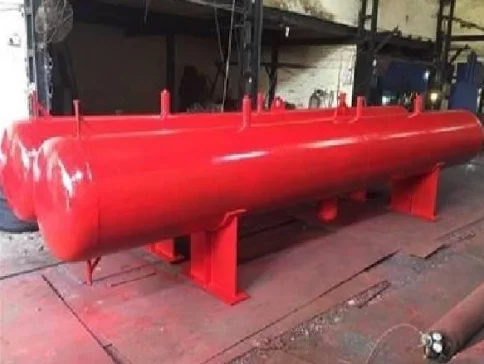
Safe, efficient storage of liquid ammonia between compressor, condenser and evaporator circuits — engineered to ASME, IS 2825 and PED standards.
The Prime Coil ammonia pressure receiver range covers both high pressure and low pressure vessels used to store liquid refrigerant at controlled conditions between the compressor, condenser, and evaporator circuits. A properly sized ammonia pressure receiver is the difference between a stable, safe plant and one that suffers constant refrigerant management problems.
Our ammonia pressure receiver range covers both High Pressure Receivers (HPR), installed downstream of the condensers to hold condensed liquid ammonia at high side pressure, and Low Pressure Receivers (LPR), used in pumped liquid overfeed systems to supply saturated liquid to the evaporators. Both variants are available in 26 standard models spanning internal gross volumes from 4.4 to 329.1 cubic feet — with pump-down capacities from 130 to 9,740 pounds of ammonia based on 80% liquid fill at 90°F.
Every ammonia pressure receiver is fabricated from carbon steel or low-temperature steel to ASME, IS 2825, and PED standards, with third-party inspection reports and hydraulic test certificates supplied for every unit. Shells up to 300 mm (12″) are made from seamless or welded pipes; above 300 mm they are rolled from plate. Diameters range from 200 mm (8″) to 1200 mm (48″), and lengths from 1.5 metres (5′) to 7.5 metres (25′) — covering everything from small backyard cold storage plants to industrial ice manufacturing facilities and 5,000+ TR turnkey systems.
Why every ammonia refrigeration plant needs a properly sized receiver
An ammonia pressure receiver serves three critical functions in your refrigeration circuit:
- Charge buffer — accommodates thermal expansion and contraction of liquid ammonia as ambient temperature swings across day and night cycles
- Steady liquid feed — provides continuous supply to expansion devices even when compressor load fluctuates
- Safety reservoir — allows the plant to be pumped down and isolated safely for maintenance without venting refrigerant
Choosing the right ammonia pressure receiver size and configuration protects your plant’s operational reliability for its full 20+ year design life.
Design & fabrication standards
Every ammonia pressure receiver we ship complies with:
- ASME Section VIII Division 1 (pressure vessel code)
- IS 2825 (Indian pressure vessel standard)
- PED 2014/68/EU (European Pressure Equipment Directive)
- PESO SMPV Rules 1981 (Indian statutory compliance)
- IBR (Indian Boiler Regulation) where applicable
Third-party inspection is available from Lloyd’s Register, TÜV, DNV, or SGS depending on your project requirement.
Complete fittings package
Every ammonia pressure receiver ships ready for installation with:
- Reflex-type gauge glass with isolation valves
- High and low liquid level switches (float or capacitive)
- Dual safety relief valves with 3-way selector
- Main isolation valve, drain valve, purge valve
- Pressure gauge with siphon
- Additional connections (level transmitters, temperature sensors, oil drain) added per specification
Built to run, season after season.
26 standard models
Full range from 4.4 to 329.1 cubic feet internal gross volume, with pump-down capacities from 130 to 9,740 pounds of ammonia. Standard sizing covers 95% of industrial refrigeration installations — custom sizes fabricated on request for the remaining.
Carbon steel / LT steel construction
Carbon steel shells and dished ends for standard duty; low-temperature steel available where operating conditions demand it. Material selection based on your minimum design metal temperature (MDMT) — critical for cold-climate installations and low-side receiver applications.
Precision fabrication
Shells up to 300 mm diameter fabricated from seamless or ERW welded pipes for consistent wall thickness. Above 300 mm, shells rolled from certified pressure vessel plate. Longitudinal and circumferential welds executed by qualified welders to WPS/PQR-approved procedures.
International standards compliance
Design and fabrication to ASME Section VIII Div 1, IS 2825, PED 2014/68/EU, PESO SMPV Rules 1981, and IBR as applicable. Third-party inspection agencies (Lloyd's, TÜV, DNV, SGS) engaged as per client requirement.
Hydraulic & pneumatic testing
100% of receivers hydro-tested at 1.5x design pressure before dispatch. Pneumatic leak testing to soap bubble standard on all welded joints. Test certificates and radiography reports supplied with every vessel.
Horizontal or vertical orientation
Horizontal receivers for high-capacity duties where floor space permits — better liquid separation, easier level indication. Vertical receivers for space-constrained plant rooms and smaller charge applications. Selection based on your plant layout and process flow.
Complete fitting package
Every receiver ships with essential fittings — reflex-type gauge glass, high and low liquid level switches, isolation valves, dual safety relief valves (one primary + one standby), drain valve, purge valve, and pressure gauge. Supports safe commissioning and operation from day one.
Long service life
20-year+ design life with standard maintenance. Carbon steel construction, controlled internal environment, and proper installation protect against corrosion. Documented inspection intervals per IBR and factory recommendations extend service life indefinitely.
Specifications
| Number of standard models | 26 |
|---|---|
| Internal gross volume | 4.4 to 329.1 cubic feet |
| Pump-down capacity | 130 to 9,740 lb ammonia (at 80% fill, 90°F) |
| Diameter range | 200 mm (8") to 1,200 mm (48") |
| Length range | 1.5 m (5') to 7.5 m (25') |
| Shell material — small dia | Seamless or ERW welded pipe (up to 300 mm dia) |
| Shell material — large dia | Rolled plate (above 300 mm dia) |
| Dished end material | Carbon steel / Low-temperature steel |
| Design code | ASME Section VIII Div 1 / IS 2825 / PED 2014/68/EU |
| Design pressure | 17.6 bar (250 psig) typical, higher on request |
| Design temperature | -40°C to +50°C standard |
| Hydraulic test | 1.5x design pressure, 100% units |
| Radiography | Spot / 100% RT per code requirement |
| Certification | PESO SMPV, IBR compatible on request |
| Third-party inspection | Lloyd's, TÜV, DNV, SGS on request |
Where it's used.
- Industrial ammonia refrigeration
- Cold storage plants
- Ice manufacturing
- Food processing facilities
- Dairy & beverage plants
- Chemical process cooling
- Pharmaceutical refrigeration
- Marine & shipbuilding refrigeration
- Turnkey ammonia plant rooms
Product questions, answered.
What's the difference between a High Pressure Receiver and a Low Pressure Receiver?
Position and function. High Pressure Receivers sit downstream of the condensers and store liquid ammonia at condensing pressure — they act as the plant's main refrigerant reservoir. Low Pressure Receivers are used in pumped liquid overfeed systems, positioned between evaporators and the recirculation pump; they ensure the pump only sees sub-cooled liquid, never vapor. Both are pressure vessels, but their operating pressures and sizing calculations are very different.
How do I know what size receiver I need?
The primary sizing rule for High Pressure Receivers is 80% liquid fill at design ambient temperature (typically 90°F/32°C), holding the plant's full ammonia charge plus 20% freeboard. For Low Pressure Receivers, sizing is based on your recirculation flow rate, evaporator overfeed ratio, and required pump NPSH. Send us your plant schematic and load and we'll size the receiver correctly — undersized units are the most common cause of operational headaches in ammonia plants.
Carbon steel or low-temperature steel — which do I need?
Depends on your Minimum Design Metal Temperature (MDMT). For most High Pressure Receivers where operating temperatures stay above -20°C, standard carbon steel (typically SA-516 Gr 70) is adequate. Low Pressure Receivers seeing colder liquid — and installations in cold-climate regions — need low-temperature carbon steel (SA-333 Gr 6 or equivalent) with impact-tested materials. Our engineers specify the correct grade during quotation.
Are the receivers PESO / IBR / third-party certified?
Yes to all three. PESO (SMPV Rules 1981) certification is standard for Indian projects; IBR certification available where required. For international projects we work with Lloyd's, TÜV, DNV, SGS as third-party inspection agencies. Every receiver ships with material test certificates, welding procedure records, hydraulic test certificates, and radiography reports.
What fittings come with the receiver?
Standard fitting package includes: reflex-type gauge glass with isolation valves, high and low liquid level switches (float-type or capacitive), dual safety relief valves (primary + standby with 3-way selector), main isolation valve, drain valve, purge valve, and pressure gauge with siphon. Additional connections — level transmitters, temperature sensors, oil drain — added per your specification.
What's the lead time?
Standard receivers from our regular model list ship in 4-6 weeks from order confirmation. Custom sizes or receivers requiring specific third-party certification (Lloyd's, IBR) run 8-10 weeks. We do not stock finished receivers — every unit is fabricated to your project requirements to ensure MTC traceability and code compliance.
Can you supply just the receiver, or does it come as part of a full plant?
Both. We supply receivers as standalone items for clients building their own plant or replacing existing vessels. We also supply full ammonia refrigeration turnkey packages where receivers are part of the integrated skid. Pricing, drawings, and support are the same either way — you tell us the scope of supply, we deliver accordingly.
How is transportation handled for large receivers?
Receivers up to 6 metres length and 2 metres diameter transport by standard flatbed truck within India (no over-dimensional permits needed). Above that, we arrange over-dimensional transport permits and route surveys. For export orders, receivers are packed on cradles for container or break-bulk shipping. Loading, transport, and site unloading coordination is part of our supply scope.
Every ammonia receiver we ship carries full traceability — material certificates, welder qualifications, hydro-test records, and radiography reports. When you need to satisfy a compliance audit five years down the line, the paperwork is where you'll find the difference between a certified vessel and one you have to replace.
Capacities & model codes
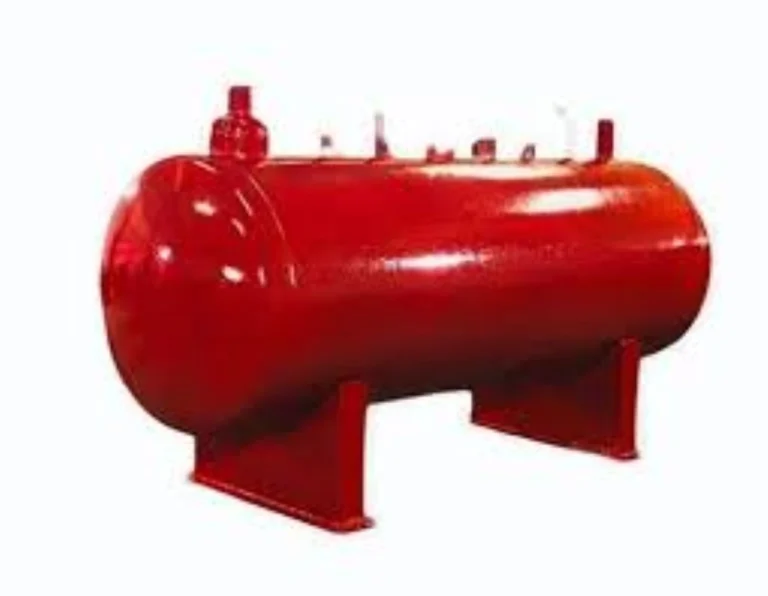
High Pressure Receivers Ammonia Based
Installed downstream of the condensers to store liquid ammonia at high-side pressure. Serves as the primary refrigerant reservoir for the plant — accommodating charge fluctuations, providing steady liquid feed to expansion devices, and acting as a buffer during compressor stops. Sized to hold the plant's full operating charge with 20% freeboard.
- Downstream of condensers, holds condensed liquid ammonia
- Horizontal or vertical, depending on layout
- Full plant charge holding capacity + 20% freeboard
- Standard, low-temperature, or NACE HIC-resistant steel options
- Sight glass, level switches, safety valves included
Low Pressure Receivers Ammonia Based
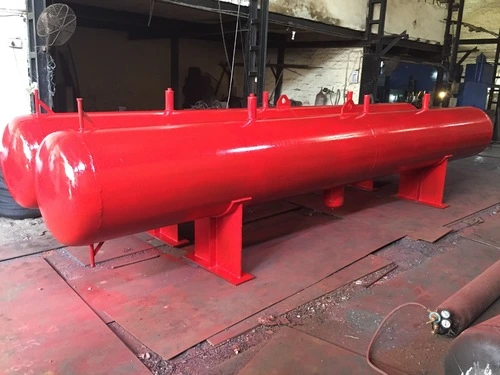
Used in pumped liquid recirculation (overfeed) systems, positioned between the evaporators and the pump. Ensures the recirculation pump receives sub-cooled liquid only — protecting compressors from liquid slugging while enabling the efficiency gains of overfeed evaporator operation.
- Downstream of evaporators in overfeed systems
- Protects pump from vapor ingress
- Enables 3:1 to 6:1 overfeed ratios for maximum evaporator efficiency
- High and low liquid level floats, isolation and purge valves
- Sturdy steel structural mounting for pump-off installation
Tell us your daily requirement.
Share your output target, product and ambient conditions — we'll specify the machine and the plant around it.