Category Process cooling · 10–3,000 kW

Industrial Chillers & Heat Pumps.

An industrial chiller produces chilled water, glycol or brine at a controlled temperature and delivers it to the process. The cold room never sees the refrigerant — it stays inside the chiller package, and…

Industrial Chillers & Heat Pumps

Products in this category

4 products
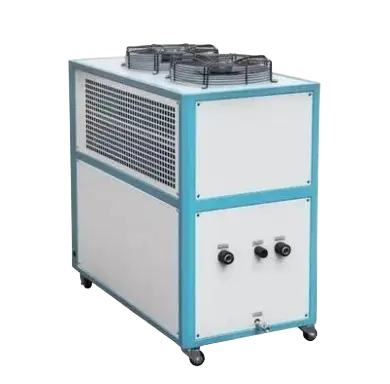
Air Cooled Industrial Chillers
Industrial Process Cooling

Air Cooled Industrial Chillers

Prime Air Cooled Industrial Chillers are engineered to deliver precise process cooling for demanding industrial applications. Available in screw and scroll configurations, these chillers offer cooling capacities from…

Capacity
10 kW – 3000 kW
Refrigerants
HFC Refrigerants
Temperature
+40°C to −40°C
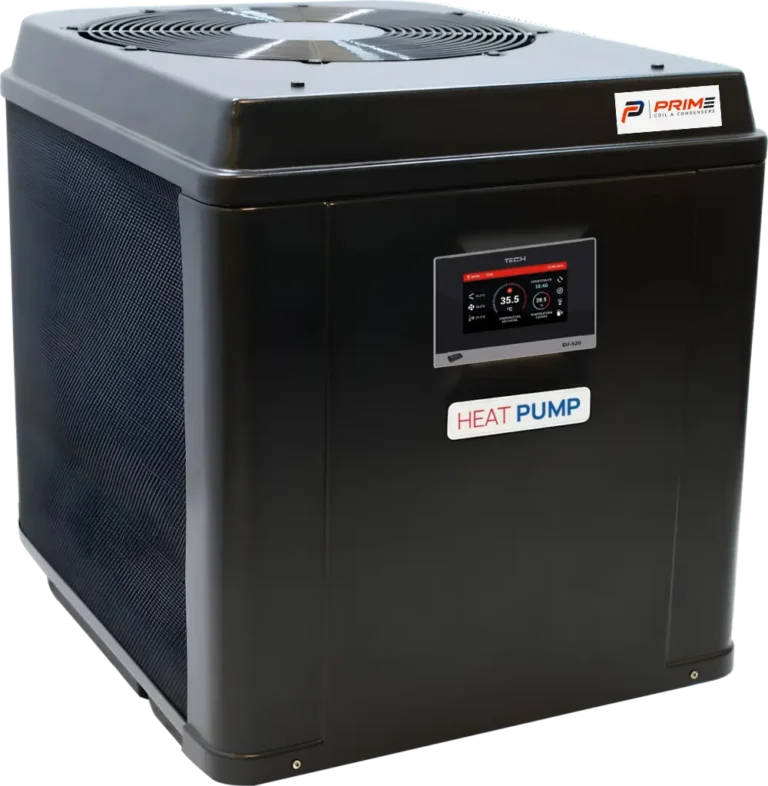
Heat Pump
Heat Pump Solutions

Heat Pump

Prime Heat Pumps are high-efficiency systems that transfer heat using an advanced refrigeration cycle to provide both heating and cooling. Designed to reduce energy consumption, they can achieve…

Temperature
Heating & Cooling Applications
Construction
Heavy-Duty Heat Pump Constructi…
Configuration
Heat Pump System
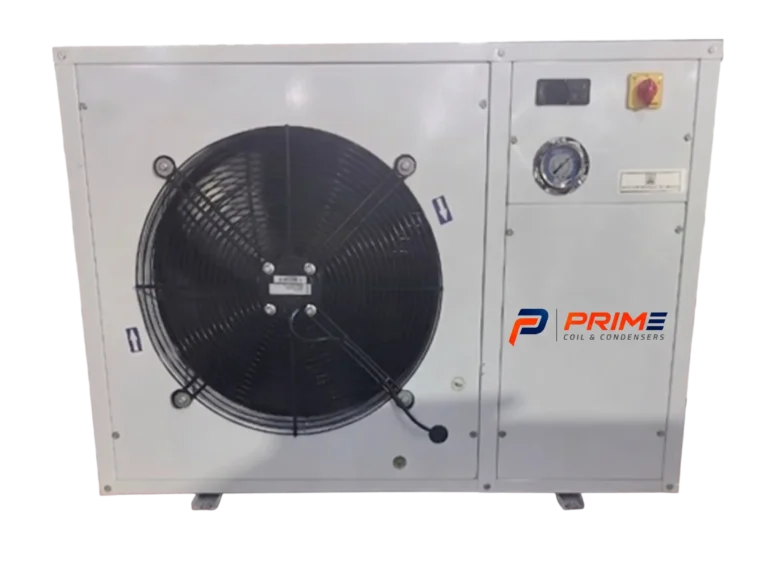
Heat Pump – Domestic 60°C
Domestic Heat Pumps

Heat Pump – Domestic 60°C

Prime Heat Pump – Domestic 60°C is a high-efficiency heating and cooling system designed for residential and light commercial applications. Available in capacities from 6 kW to 35…

Capacity
6 kW – 35 kW
Temperature
Water Heating up to 60°C
Construction
Compact Heat Pump Construction
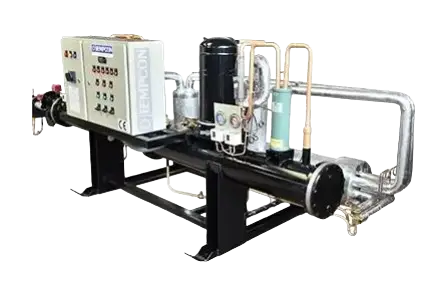
Water Cooled Industrial Chillers
Industrial Process Cooling

Water Cooled Industrial Chillers

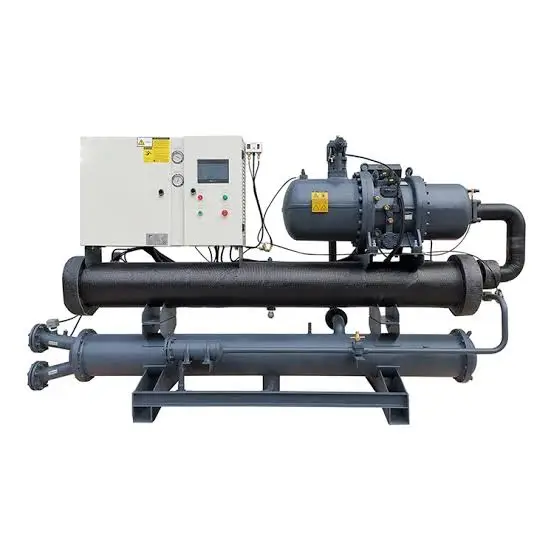
Prime Water Cooled Industrial Chillers are engineered to deliver precise and energy-efficient process cooling for industrial applications. Available in screw and scroll compressor configurations, these chillers feature high-performance…

Construction
Shell-and-Tube Condenser Constr…
Configuration
Water-Cooled Screw & Scroll Chi…
About this range

Industrial Chillers & Heat Pumps.

An industrial chiller produces chilled water, glycol or brine at a controlled temperature and delivers it to the process. The cold room never sees the refrigerant — it stays inside the chiller package, and the secondary fluid does the work. That separation is the reason chillers suit process cooling, beverage lines, pharmaceutical jacketed vessels and any load distributed across a building where running refrigerant pipework to every point would be impractical or unsafe.

The same refrigeration cycle, run in reverse, gives you the heat pump — delivering both heating and cooling from one system. For water heating specifically, the energy savings are large enough to change the economics of hotels, hospitals and dairies that currently heat water electrically or with boilers.

Prime Coil builds both in-house: air-cooled and water-cooled chillers from 10 kW to 3,000 kW with screw and scroll compressor options, and heat pumps from domestic 6 kW units to industrial scale.

Air-cooled industrial chillers

The air-cooled chiller is a self-contained package — compressor, evaporator, air-cooled condenser, controls and pipework in one frame. No cooling tower, no condenser water circuit, no water treatment. Power it, connect the chilled water loop, and it is running.

  • Capacity — 10 kW to 3,000 kW
  • Compressor — screw and scroll options
  • Temperature range — +40°C to −40°C
  • Heat rejection — air-cooled, no cooling water required
  • Construction — heavy-duty industrial

Air-cooled suits sites without cooling water, where the chiller can sit outdoors with clear air around it, and where the capital simplicity of no tower justifies the slightly higher condensing temperature on peak-ambient days.

The temperature range deserves attention. +40°C to −40°C on one platform means the same chiller family covers process cooling at +7°C, cold storage glycol loops at −5°C, and deep-chill duties at −35°C — different compressor staging, same architecture. That range is unusually wide for a packaged chiller and removes the need to change platforms as the duty gets colder.

Water-cooled industrial chillers

Water-cooled chillers pair with shell-and-tube condensers and reject heat to a cooling tower or a process water return. The result is a lower, more stable condensing temperature — quieter operation, a more compact footprint than an equivalent air-cooled unit, and higher efficiency under sustained load.

Choose water-cooled when cooling water already exists on site, when the chiller installs indoors with no outdoor space, when noise is a constraint, or when the load is large enough and continuous enough for the tower to justify its own operating cost.

Screw and scroll compressor options apply here too, selected against the duty profile. Scroll suits smaller duties and applications with frequent start-stop. Screw suits larger continuous loads where part-load efficiency through slide-valve unloading matters.

Heat pumps — industrial

A heat pump moves heat from a low-temperature source to a higher-temperature sink using the same refrigeration cycle a chiller runs, but with both sides doing useful work. The evaporator cools (chilling a process stream, for example) while the condenser heats (producing hot water).

On a dairy that needs chilled water at +4°C and hot water at +60°C simultaneously, a heat pump delivers both from one energy input — saving up to 70% of the energy that separate chilling and boiler heating would consume.

The 70% figure is not marketing. A heat pump with a COP of 3.5 delivers 3.5 kW of heating for every 1 kW of electrical input. An electric boiler delivers 1:1. The gap is the heat the cycle collects from the source side for free.

Heat pumps — domestic 60°C

A compact unit delivering hot water up to 60°C for homes, villas, gyms, hospitals and commercial buildings. Available from 6 to 35 kW on 220V or 400V supply.

The domestic heat pump is a different market from the rest of this page, and we are transparent about that. Industrial refrigeration is our core. We offer the domestic unit because the technology is the same, the manufacturing is in-house, and there is genuine demand from hospitality and healthcare clients who already buy our commercial equipment and ask whether we do water heating too.

If your requirement is purely domestic hot water with no commercial refrigeration context, a dedicated heat pump manufacturer may serve you better on after-sales coverage. If you are already a Prime Coil customer or your building has both a process cooling need and a hot water need, the combination is where the value sits.

Screw or scroll — choosing the compressor

Scroll compressors suit smaller duties — typically below about 100 kW — and applications with frequent cycling. They are simpler, have fewer wearing parts, and tolerate liquid return better than a screw.

Screw compressors suit larger, continuously loaded duties. Their slide-valve unloading gives smooth part-load capacity from 100% down to about 25% without cycling, which matters on process loads that vary through the day. Above about 200 kW, screw is usually the only practical option.

Between 100 kW and 200 kW either works, and the choice follows the load profile more than the capacity. A steady load favours screw; a variable or intermittent load favours scroll or multiple scrolls with staging.

Where chillers sit alongside direct systems

A chiller is not a replacement for direct refrigeration — it is a different architecture. Direct expansion puts the evaporator in the room and the refrigerant reaches the load. A chiller keeps the refrigerant inside the package and sends a secondary fluid to the load.

Choose direct when the load is a cold room or freezer with a small number of large evaporators close to the plant. Choose a chiller when the load is distributed — multiple zones, long pipe runs, process equipment with jacketed vessels — or when safety considerations mean the refrigerant should not enter occupied areas.

Our evaporator and unit cooler range covers the direct side, and our condensing units power them. This chiller range covers the secondary side.

Applications

Where this range is used.

  • Homes
  • Villas
  • Gyms
  • Hospitals
  • Commercial Buildings
FAQ

Industrial Chillers & Heat Pumps — answered.

Air-cooled or water-cooled chiller?

Air-cooled when there is no cooling water on site, the chiller can sit outdoors, and capital simplicity matters. Water-cooled when cooling water exists, the chiller installs indoors, noise is a constraint, or the load is large enough for a tower to justify its operating cost. Water-cooled runs more efficiently under sustained load; air-cooled costs less to install and maintain.

Screw or scroll compressor?

Scroll for duties below about 100 kW and applications with frequent cycling — simpler, fewer wearing parts. Screw for larger continuous loads where slide-valve part-load unloading matters. Between 100 and 200 kW, the load profile decides: steady favours screw, variable favours scroll.

How does a heat pump save 70% on water heating?

A heat pump with a COP of 3.5 delivers 3.5 kW of heating for every 1 kW of electrical input, because it collects heat from the source side rather than generating all of it from electricity. An electric boiler delivers 1:1. The gap is the free heat the cycle moves from the cold side. On a dairy producing chilled water and hot water simultaneously, both outputs come from one energy input.

Can a chiller produce glycol or brine, not just chilled water?

Yes. The evaporator is selected for the secondary fluid — glycol and brine have lower heat transfer and higher viscosity than water, so a unit sized on water figures will underperform. Specify the fluid and concentration at enquiry stage and the evaporator and pump are matched to it.

What is the difference between an industrial heat pump and the domestic unit?

Scale and application. The industrial heat pump integrates with a process — simultaneous chilling and heating on a dairy line, for example. The domestic unit is a standalone hot water heater at 6 to 35 kW for buildings. The technology and the manufacturing are the same; the sizing, controls and installation context are different.

Sized for your plant

Tell us your load — we'll size the right unit.

Share your capacity, temperature and ambient conditions and our engineers will specify the system.

Request a Quote


    Your details stay private. No obligation, no spam.