Choosing the right vessel for the duty
Vessel selection follows the system, not the other way round. A pumped liquid overfeed plant needs a different accumulator volume from a DX plant of the same capacity, because the accumulator has to hold the surge volume returning from the evaporators. A two-stage plant needs an intercooler that a single-stage plant does not.
The four questions that determine every vessel on a plant are: total refrigerant charge, the feed system (DX, pumped overfeed or gravity flooded), the number of compression stages, and the lowest design metal temperature the vessel will see.
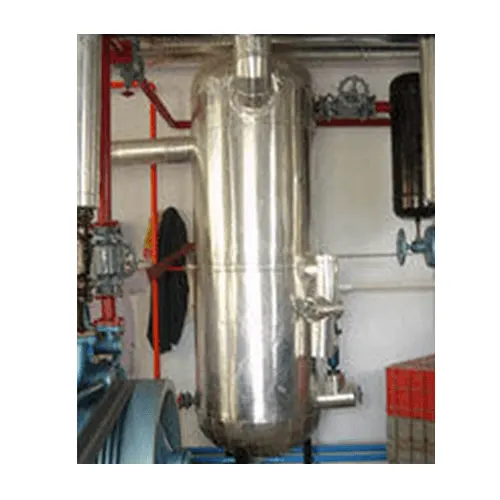
High and low pressure receivers
The receiver stores the liquid charge and gives the system somewhere to put refrigerant during pump-down. Undersize it and you cannot pump the plant down for service; oversize it and you have paid for steel and refrigerant you never use.
Our range covers 26 standard models, from 4.4 to 329.1 cubic feet internal gross volume, with pump-down capacity from 130 to 9,740 lb. Custom sizes are routine where the standard steps do not suit the charge.
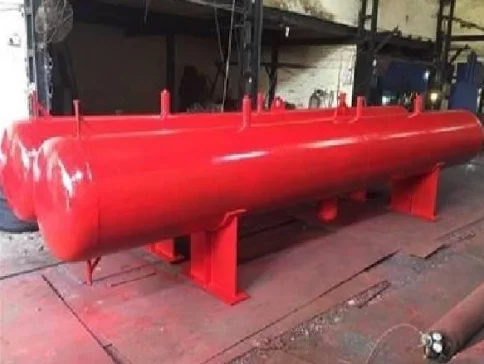
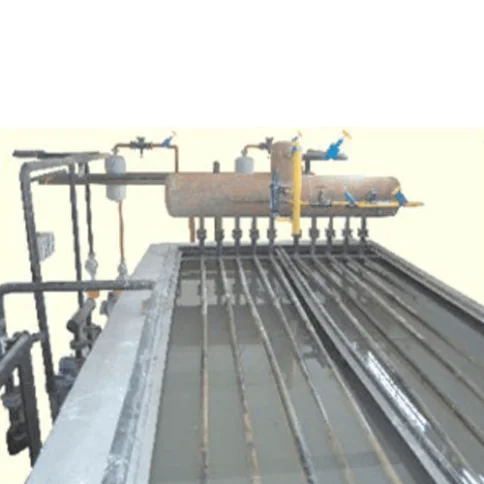
Accumulators — horizontal and vertical
The accumulator is the compressor's insurance policy. It separates liquid from the suction gas so that only vapour reaches the compressor, and on an overfeed system it also holds the recirculated liquid.
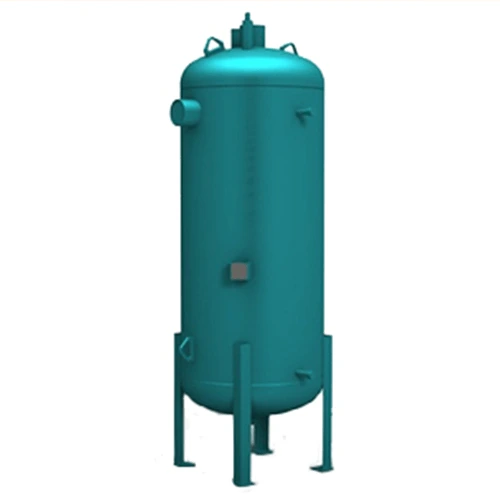
Horizontal accumulators suit low headroom and larger surge volumes. Vertical accumulators suit constrained floor area and give a longer settling height for the same volume, which improves separation. Both are built from carbon steel or low-temperature steel shell and end plates, with shells up to 300 mm from welded pipe and above 300 mm rolled from plate.
Oil separators
Ammonia and oil do not mix, so oil carried over into the system collects in the evaporators and coats the heat transfer surface. A fouled evaporator loses capacity quietly — the plant runs, it just costs more every hour.
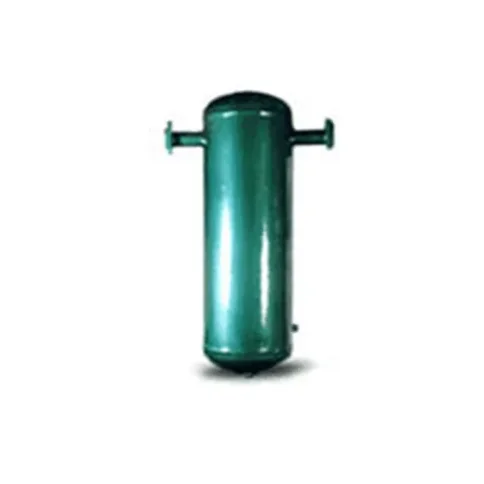
Our surge-type separators mount vertically in the compressor discharge line, separate entrained oil from the discharge gas and return it to the crankcase. Separator sizing follows compressor displacement and discharge velocity, not plant tonnage.
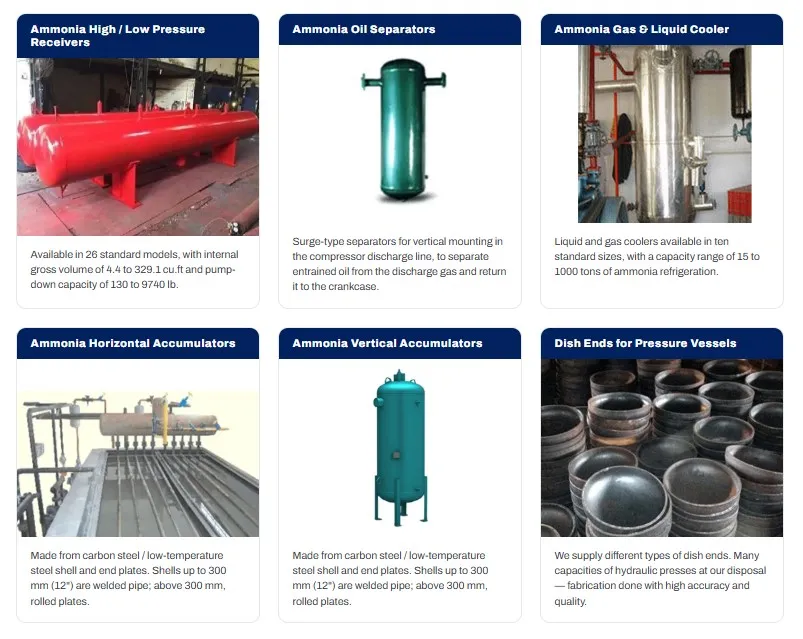
Gas and liquid coolers — subcoolers and intercoolers
Between compression stages, discharge gas has to be desuperheated before it enters the high stage, or discharge temperature climbs and oil life falls. Subcooling the liquid before the expansion device increases refrigerating effect and reduces flash gas.
Our gas and liquid coolers are available in ten standard sizes covering 15 to 1,000 tons of ammonia refrigeration.
Dish ends
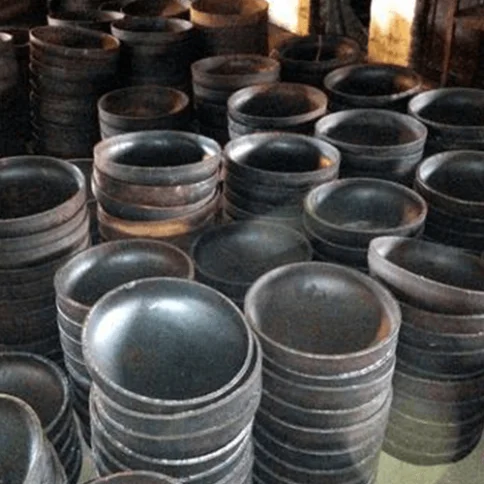
We press dish ends across the full range of standard shapes — torispherical (F&D), ellipsoidal (2:1), hemispherical and flat — from 100 mm to 5,000 mm diameter. Multiple hydraulic presses in-house means we control both the schedule and the accuracy, and we supply dish ends to other fabricators as well as using them in our own vessels.
Codes, materials and documentation
IS 2825 is the Indian code and is accepted by statutory authorities across India, including for PESO purposes. ASME is normally specified for export projects, multinational clients, or where a corporate engineering standard requires it. We build to both.
Carbon steel is standard. Low-temperature steel is specified where the design metal temperature falls below the range carbon steel is qualified for — which on an ammonia plant means most low-stage vessels. Getting this wrong is not a performance problem, it is a brittle fracture risk, so it is decided at design stage rather than negotiated later.
Every vessel is hydrostatically tested to the pressure required by the applicable code, with dimensional inspection, weld examination, and material test certificates included in the handover documentation. Where a project requires third-party inspection, we build it into the manufacturing schedule rather than treating it as an interruption.