Cold Chain Solutions.
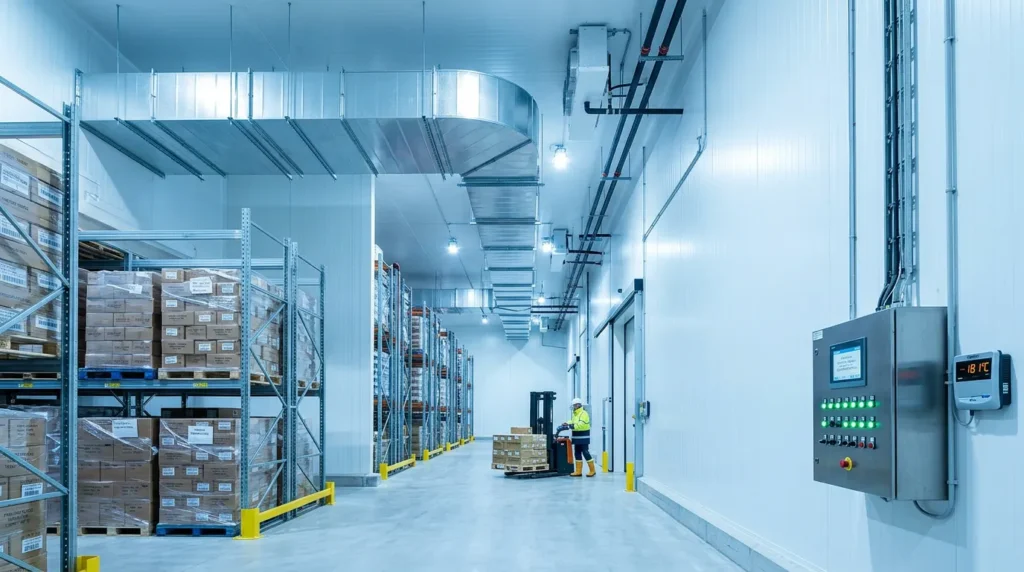
Cold storage doesn't fail because the refrigeration stops working. It fails because the atmosphere inside the room drifts outside the specification — CO₂ builds up from produce respiration, humidity swings between condensation and desiccation, ethylene concentrates and accelerates ripening, fresh air enters as an uncontrolled load on the refrigeration system, and staff working inside get inconsistent conditions that make quality management difficult.
Prime Coil Cold Chain Solutions address every one of these failure modes with a coordinated package of air handling equipment, sensors, controls and humidification — engineered specifically for the operating conditions inside cold storage facilities. Each component works standalone, but the real advantage comes from delivering them as an integrated system that is designed, built, commissioned and supported from a single supplier.
The specific problems this range solves
Cold storage HVAC is not building HVAC. The temperature range is wider, the humidity requirements are tighter, the refrigeration cost per unit of ventilation air is dramatically higher, and the equipment has to run for 20+ years in an environment that is corrosive to standard commercial hardware. Off-the-shelf commercial air handlers, sensors and controls fail predictably in cold storage service, and repair or replacement costs quickly exceed the price of properly-engineered equipment in the first place.
Fresh air ventilation without the refrigeration penalty
Every cold storage room needs some fresh air introduction — produce respiration produces CO₂ that has to be removed, ethylene from ripening fruit accelerates spoilage across the room, and staff working inside need breathable air. But every cubic metre of fresh air brought in has to be cooled from ambient (35-40°C in Indian summers) down to storage temperature (-25°C in freezer rooms). Without heat recovery, ventilation can easily consume more refrigeration energy than product cooling itself.
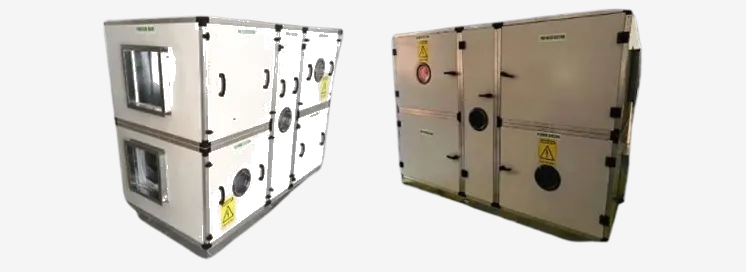
Our Treated Fresh Air Machines use a rotary heat recovery wheel to capture cold energy from the outgoing exhaust air and transfer it to incoming fresh air. Recovery efficiency reaches 82% at design conditions, cutting the refrigeration load required for ventilation by 60-70%. On a facility running 5,000 CFM of continuous ventilation, that translates to ₹15-25 lakh per year in avoided electricity — with payback typically in 2-3 years.
Real-time atmospheric monitoring
Controlled atmosphere storage requires holding CO₂, O₂, and ethylene concentrations within tight ranges — the difference between three months of storage life and six months of storage life for an apple or a pear can be a few percent variance in atmosphere composition. General-purpose sensors from commercial suppliers drift, fail at low temperatures, or provide readings too slow for effective control.
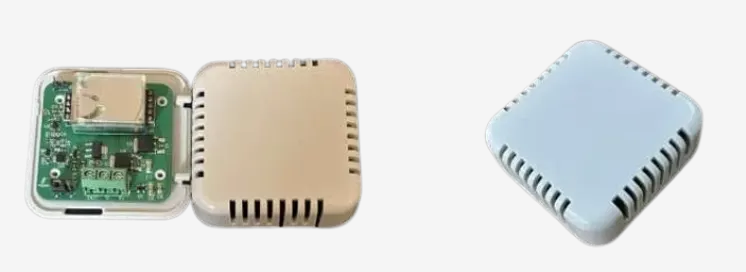
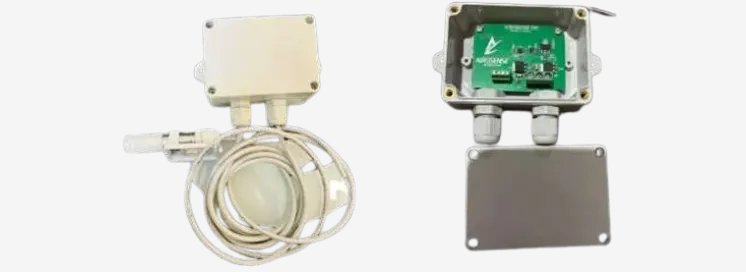
Our sensor range — CO₂, humidity, and temperature transmitters, all CE-certified and Made-in-India — is engineered specifically for cold-chain operating conditions. NDIR technology for CO₂ measurement across the full range required for CA storage (0-100,000 ppm), IP-rated enclosures for direct storage room mounting, and 2-year replacement warranty on every unit. Backed by field data from working installations, not just laboratory specifications.
Precision humidity control
Produce quality is as sensitive to humidity as it is to temperature. Too dry, and fruit shrivels, meat dehydrates, and pharmaceutical products lose formulation stability. Too wet, and condensation forms on cold surfaces, mould grows, and cardboard packaging loses structural integrity. The right RH depends on the product — 90-95% for leafy vegetables, 65-75% for grains, 55-65% for pharmaceuticals — and holding to those setpoints requires precise humidification when the refrigeration is dehumidifying the air.
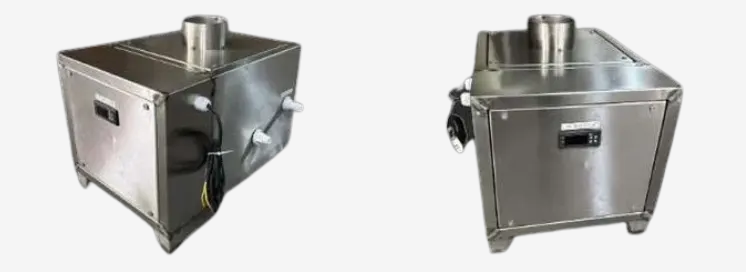
Our Ultrasonic Humidifiers use SS-304 vibrating-disc technology to produce fine cool mist (particle size under 5 microns) that evaporates completely before contacting product surfaces. Food-grade construction is trusted by MNCs like PepsiCo and ITC for high-value produce storage. Misting capacity from 5 to 40 litres per hour serves rooms from small chill chambers to large commercial cold storage warehouses.
Coordinated control across the whole facility
Individual sensors and equipment matter, but the value comes from coordinated control — a Siemens PLC that reads every sensor, modulates every actuator, and holds the entire storage environment within specification across seasonal and daily variation. Off-the-shelf building management systems are not designed for cold-chain operating conditions and cannot handle the sensor densities that CA storage or pharmaceutical facilities require.
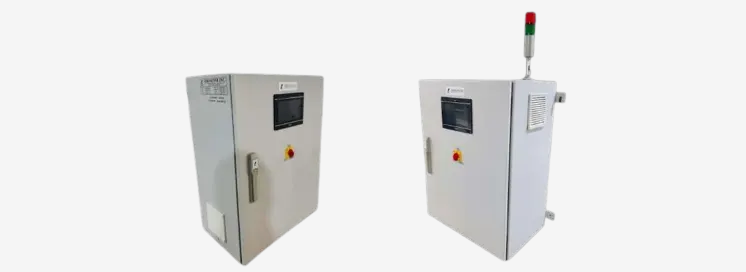
Our PLC Control Panels are built on the Siemens platform with HMI touchscreens serving up to 12 chambers per panel, on-screen and pen-drive data logging up to 2 years storage, and online access without static IP requirements. Data logging matters for regulatory compliance (pharmaceutical GDP, food safety audits, insurance claims); coordinated control matters for equipment life and product quality. Same platform runs a 500 tonne cold storage or a 5,000 tonne CA facility.
Why single-source integrated supply matters
Cold storage facilities that source their HVAC, sensors, controls and refrigeration from separate vendors end up with three predictable problems:
Coordination failures at boundaries. The refrigeration contractor's control philosophy and the HVAC contractor's control philosophy don't match. The temperature sensor manufacturer's calibration standard and the PLC integrator's programming assumptions are subtly different. Small mismatches accumulate into significant operational problems that no single vendor is willing to own.
Sub-optimal component selection. Each vendor optimises their scope; nobody optimises the whole. The result is over-specified equipment (each vendor adding margin for the vendor next to them) or under-integrated equipment (nobody responsible for making the interfaces work). Both increase capital cost and reduce operational reliability.
Support fragmentation over 15-20 years. Cold storage equipment runs for decades. In year 8, when the humidity sensors need replacement, the original sensor vendor is no longer available, and finding replacements that work with the original PLC becomes a multi-month project. When Prime Coil supplies the integrated package, we maintain the support relationship across the entire equipment lifecycle.
Every Prime Coil Cold Chain Solutions installation is designed, built, commissioned and supported by one engineering team — the team that understands both the refrigeration and the atmospheric control, and takes responsibility for both.
Built for Indian cold-chain conditions
Prime Coil equipment is engineered specifically for the ambient conditions, power quality, water quality, and operating practices that characterise Indian cold storage facilities. High summer ambient temperatures (regularly exceeding 45°C in northern and western India), monsoon humidity, uncertain grid power with frequent voltage sags, and cooling water quality that ranges from adequate to genuinely difficult — all factors that European or American equipment specifications do not accommodate well.
Every unit is fabricated at our own facility, tested against site conditions rather than laboratory ideals, and delivered with a support commitment that recognises we may need to visit the site for the next 20 years.
Prime Coil & Condensers Pvt. Ltd. was founded by industry veterans Neeraj Checker and Vikram Luthra, and supplies cold-chain automation across India and to export markets.